 Follow us on Twitter: @ggtl
 Join our friendly community!


Latest news

 13.5.12

Last December, Destructoid’s Jim Sterling broke the story that Kingdoms of Amalur: Reckoning would feature a seven-part quest line, hidden behind an online pass.
Sterling called the practice "slimy and unjustified" on his personal Twitter account, and the topic quickly became a hot-button subject amongst savvy internet-dwellers wishing to offer their tuppenceworth on EA's new favourite money-making strategy. Part of the anger stemmed from the fact that Kingdoms of Amalur’s online code was restricting access to single-player content already on the disc, instead of online content, like previous games with EA Online Passes.
This is not the first time this year that a kerfuffle has been raised over single-player content restrictions. Last September, Warner Bros. Interactive and Rocksteady Studios came under fire when they sealed off several playable sections of Batman: Arkham City featuring Catwoman behind an unlock code. The move came under fire from users who felt they were being cheated out of the full experience, especially from the perspective of gamers who may not have an internet connection for their console, or anyone who might try to buy the game used.
Unfortunately, online passes are likely here to stay, especially seeing as publishers are trying their utmost to head off used-game sales. What started as a justification to recover operating costs for online servers has turned into yet another way for EA to coax a little more money out of its customers. And, beyond EA and Warner, THQ has also used online passes for Homefront and both of its UFC games, whilst Activision has as yet chosen not to follow the online pass route.
A hefty amount of digital ink has already been spilled on the subject of online passes, forming everything from reasonable discourse to righteous indignation. Some see online passes as a regrettable but understandable business decision, a reasonable push-back against used-game sales. Others feel they punish a significant part of their consumer base, and provide gamers with a worse experience; after all, typing in a new code every time one buys a new game gets very old, very quickly.
On a side note, I’m not certain that used-game sales cut into profits quite so much as publishers say they are, but I bet the fact that one of the world’s largest game retailers depends so heavily on used games sales doesn’t help.
I used to be reasonably tolerant of online passes; as a gamer who tries to purchase new games and support developers, rather than retailers, it didn’t affect me too heavily. Most of the games using online passes were sports games: the likes of Madden and FIFA, games I wouldn’t usually play but would likely purchase new if I did - new rosters, after all. However, online pass implementation has become much more ubiquitous - and, one could argue, much more stupid - in recent months. Entering each new code becomes more tedious every time, and the content hidden behind these codes has grown from bonus, thank-you-for-playing content to important, central portions of the game as a whole.
Perhaps my worst experience with online passes came when I rented Battlefield 3, for what was supposed to be a review. I ploughed through the campaign in one five-hour session (my preferred method for tight, focussed FPS campaigns), and after watching the credits roll, I sat down for a few rounds of multiplayer, excited to spend more time with one of my favourite online series in recent years. Instead, I was greeted with a screen that told me I needed to buy a brand new copy of the game in order to try the multiplayer at all.
I was shocked. Not only was the game depriving me access to arguably the reason to purchase Battlefield 3, but it wouldn’t even let me try it out and decide if it was right for me. Rather than spend an extra ten dollars on top of the eight dollar rental, I returned the game, frustrated and unsatisfied - at least online sports games like Madden allowed a seven-day free trial for online modes. And the sad thing is, I decided not to purchase Battlefield 3 in the end, because I wasn’t sure whether I’d enjoy the multiplayer; without an adequate chance to sample it, the purchase became too great a risk, and caused me not to follow through.
On the other hand, I can understand why publishers use online passes, despite how much they're inarguably awful. 38 Games' Curt Schilling recently talked about why they chose to implement their 'day-one DLC', saying that, as a new series in a crowded market, they wanted to stand out and provide extra content to gamers who would buy it new; after all, if they don’t sell enough copies, the studio may not be around long enough to deliver a sophomore effort.
To me, it really comes down to expectation. Amalur is an absolutely massive game, and as sucky as it is to miss out on a seven-quest cycle, there’s still a huge amount of content already available for playing. In terms of Batman: Arkham City and its infamous gated content, I rented the game shortly after it came out, and during the time I played it, not once did I feel ripped-off for not being allowed to experience Catwoman’s sections. Batman’s main storyline was so fun and well-paced, I never felt like anything was missing from the experience, making Catwoman’s sections truly feel like 'bonus' content.
Perception is also a big part of this discussion. There are those who feel that, because both Catwoman and the seven-part quest are on the disc, they should be available right out of the box, lest the experience be otherwise 'incomplete'. Yet, for some reason, removing the content from the disc and forcing players to download it through Xbox Live or PSN seems to make it okay. Perhaps we’re all hardwired to expect a more 'transactional' feel when purchasing digital items, and the physical distance the data travels and the time needed to acquire it perhaps make the content more worth the money than if it were simply unlocked from the disc. For me, if the experience feels complete (like in the case of Batman), anything extra is worth the extra money.
A similar situation happened last year with Gears of War 3, when Epic revealed that their game had a good amount of on-the-disc DLC. Their justification? They had already drawn up and followed a projected budget for the main content (single-player campaign, multiplayer, co-op, etc.), and the DLC followed a separate budget, making both sets of content two different sets of costs. The $60 purchase covered the main game’s budget, while the on-the-disc purchases would cover the cost to design, develop and test the DLC.
Also - and this makes me part of the problem - I would much rather have buy-new incentives that are actually worth ponying up the money for. Remember the Cerberus Network, EA’s free-DLC service from Mass Effect 2? Remember how awesome your new equipment was, and how engaging your new party felt? Of course not; they were all terrible. If I’m resigned to expect extra content from buying a game brand new, that content had better be worth the money I spent over buying it used. There’s a thin line between withholding content that’s worthwhile and keeping players from experiencing the game to the fullest, but the latter feels so much more satisfying than discovering your 'bonus content' was an extra pea-shooter and two differently-coloured T-shirts.
I’m not trying to be an online pass apologist; they add new layers of difficulty to customer experiences, and they could easily lead to a slippery slope of paying for even greater and greater chunks of content. Still, I know there’s a middle-ground that can be attained, in rewarding players who buy new without penalising those who buy games used, and hopefully developers can find that happy medium in the future. In the meantime, let’s get back to complaining about something that is really irritating. Like pre-order DLC.
Labels: 38 Studios, Andrew Testerman, Batman: Arkham City, EA, Kingdoms of Amalur: Reckoning, Online Passes, Opinion, PlayStation 3, PSN, Warner Bros., Xbox 360, Xbox LIVE
- Andrew Testerman

Back in January, Square Enix released Final Fantasy XIII-2, a follow-up to Square’s most recent (and, in some circles, controversial) entry in the long-running JRPG series.
Reviews of the game have ranged from lukewarm to rather positive, but many of the critiques boil down to the same thing: the combat and gameplay are fun, but the story is awful.
For the unaware, the story is a direct continuation of XIII’s narrative. XIII-2 follows Serah, sister of the first game’s protagonist, and Noel, a time-travelling soldier who was sent back to avert a global apocalypse sometime in the future. Ignoring the prominent Terminator parallels, XIII-2’s story entails Serah and Noel travelling to different points in time, defeating dimension-shifting 'paradox' monsters and engaging in stilted, 'stylised' dialogue that wouldn't fly in a remedial script-writing class. XIII-2’s jargon-heavy world doesn’t try especially hard to welcome new players into the fold (though, to be fair, it is a direct sequel), and the melodramatic character interaction only further obfuscate the tale.
How far JRPGs have fallen in the past decade or so. Once the fore of storytelling in gaming, JRPGs are now bringing up the rear, with even the most highly-praised stories carrying an almost apologetic level of explanations and qualifications. Meanwhile, gamers are finding compelling plots and engaging characters in even the most action-packed genres.
It didn’t always used to be this way. Back in earlier days of gaming (by my watch, right up through the SNES), players more or less had to choose whether they wanted action or story. Platformers like Super Mario World or Donkey Kong Country were exciting and fun to traverse through, but they weren’t exactly go-to games for players looking for an emotional, involving experience. Conversely, RPGs didn’t offer thrill-a-minute gameplay like their platforming and shooting console-mates, but instead gave gamers characters, story arcs and more cerebral thrills than seeing how many coins they could collect before the end stage.
Now, in 2012, the wall between visceral action and involving story has been completely broken down (though not entirely removed). Games like BioShock and Assassin’s Creed are giving gamers compelling plots and engaging characters while still providing twitchy, fast-paced action. Meanwhile, games like Final Fantasy or Star Ocean, representing a genre once synonymous with storytelling, offer players staid, clichéd narratives and cardboard-cut-out characters. It’s all a bit backwards, really.
There are many potential discussions about what RPGs still have to offer the gaming world now (or, for that matter, what even qualifies as an RPG anymore, what with every game nowadays having some sort of XP system), but today we’re limiting it to JRPGs and their stories. Why do JRPG stories fail to hit, and what can be done to get the genre back on track?
I’ve held a pet theory about JRPG storytelling for a while now, and Final Fantasy XIII-2 helped to solidify it (funnily enough, it was Final Fantasy XIII that helped me form it in the first place). Back in the NES and SNES days, developers didn’t have the technological prowess to tell the stories they had in mind, one-to-one; instead, they needed to make concessions based on the technology available, both in terms of what could be displayed onscreen, and what their characters could say.
This creativity through limitation led to some of gaming’s most beloved titles: Final Fantasy VI; Secret of Mana; Chrono Trigger. Each of those games had a weighty, complex story, and the technological ceilings of the Super NES made it necessary that each story be told as cleanly as possible. Rather than tell it in the manner of a movie or television series, game directors and producers adopted a new kind of storytelling specifically for video games, one whose episodic, overarching structure most closely resembled a novel. This style helped present mature themes like suicide, addiction and death in an understated way that was simple enough to avoid melodrama, but focussed enough to avoid dulling their impact.
All this changed with the release of Final Fantasy VII. With the added hardware of the PlayStation, many restrictions imposed by the NES and SNES were lifted, letting directors and producers create games that adhered even closer to their creative visions. Players could explore even more expansive worlds, and characters could express themselves on even greater levels, with better animations and dialogue than ever before. Directors could tell exactly the story they wanted to tell, exactly the way they wanted to tell it.
It’s unfortunate, then, that the results have been so alienating. With the aforementioned hardware restrictions, game designers were forced to leave the Japanese-only sensibilities of their storytelling at the door, and instead created stories with broader, more universal themes.
Nowadays, traditional JRPGs are completely and totally steeped in Japanese storytelling conventions; the kind that are nigh-inscrutable to everyone but the most ardent Japan apologists and actual native-Japanese folk. In their desire to replicate their precise storytelling vision, game creators are able to emulate their favourite torrid Korean soap opera down to the most exact detail, leaving the non-Korean-soap-opera fans in the dark about the game’s appeal at all.
It’s not that JRPGs need to ape Western themes, or conform to a traditionally-Western idea of a game story. Chrono Trigger, my favourite game of all time, had an extremely strange story, involving a sentient robot, a talking frog and a cave woman fighting to save the world from a space parasite. Yet, the game’s story was — and still is — highly praised, not for its particulars but for its execution. Chrono Trigger painted its characters and story decisions in articulate, simple strokes, letting players meet the game halfway and invest themselves in its tale. For such ridiculous material, it had a pronounced level of subtlety and reservation (again, no doubt brought on by the SNES's limitations). It was broad, but sincere, and didn’t become caught up in trying to oversell itself.
Of course, it isn't as though top-tier JRPGs are in danger of becoming extinct. Quality JRPGs are still being made today, like Atlus’ Radiant Historia, a JRPG that, by all accounts, displays the exact same control and maturity that its 16-bit predecessors did. Perhaps it’s just a coincidence, then, that the most highly-praised traditional JRPG in years was released for the DS, a system with only slightly less hardware restraints than the SNES. Perhaps DS developers know something that console devs don’t?
Ultimately, if JRPGs are to dig themselves out of their current hole, they need to concentrate on what made them popular in the first place: storytelling. Not just Japanese storytelling, but storytelling that even JRPG neophytes can get wrapped up in. I’m not saying that publishers like Atlus should ditch such delightful J-games like Disgaea or the Atelier series, but I do think there should be room for both. Strong characters and compelling storytelling transcend cultures. JRPGs have since gained ground in terms of play mechanics, with games like Tales of Vesperia and Final Fantasy XIII-2 offering gameplay thrills on the level of the industry’s best. All they need to do is remember what they did better than any genre in gaming.
Watching JRPGs lose their prominence in game storytelling has been painful, but I firmly believe that great games can still be made using their template; look at 2008’s Lost Odyssey, a game that used old-school RPG gameplay while creating memorable locations and characters in a new, distinct way. Game storytelling is a broad field, with no one method standing 'superior' to any of the others, and there’s no reason why gamers shouldn’t have the option to enjoy a quality JRPG story along with the Portals, Uncharteds and Call of Dutys of the industry.
Note: for an excellent read on why JRPGs don’t necessarily need a good story to succeed, check out writer Kat Bailey’s new JRPG column on Joystiq.
Labels: Andrew Testerman, Chrono Trigger, Final Fantasy XIII-2, JRPG, Opinion, Radiant Historia
- Andrew Testerman

Downloadable content, along with digital distribution, is commonplace among contemporary gaming.
Not only does it allow developers to fix issues with their game post-release, but it also gives gamers the ability to augment their experience with extra features and content, if they so choose. Great as it may be, what about flagrant issues that prevent a game from being completely playable? How much content do developers hold back, so as to put it on the marketplace at a later date? When do we say that enough is enough?
Ever since the launch of Microsoft's original Xbox, DLC has blossomed into essential material that every game must embrace. As a matter of fact, it's such a decisive feature that, upon release, some games that have yet to release any DLC already have a section of the marketplace dedicated to it. At the extreme opposite end of the spectrum, some games have DLC available on their release day, a sin that many gamers regard as unacceptable. And for good reason.

Hey, I'll totally help you up here for like, you know, five bucks.
Gaming isn't a cheap hobby. Whilst you can certainly wait for games to come down in price in sales or on the used market, it's still something that you dedicate ample time to and pay for with your hard earned money. That's why when a game releases and, on day one, it already has DLC available for purchase, gamers froth with anger. Shouldn't that DLC be contained within the game itself? Take Resident Evil 5 as an example; not long after launch, a multiplayer mode became available that was found to already be on the disk. Needless to say, no one was happy about that.
One can blame BioWare and their flagship Mass Effect 3 for the current resurgence in DLC hate. Following in Resi 5's shameful footsteps, ME3 will contain day-one DLC, entitled From Ashes, at a cost of $10 or 800 Microsoft Astral Credits. However, for those who are willing to fork over the extra cash for the N7 Collector's Edition (or Digital Deluxe Edition) the DLC will come at no additional cost. BioWare has already stated their reasoning for the day-one content, but that hasn't stopped people from outright boycotting the game entirely. Overzealous as it may seem, I still see where they're coming from.
Allow me a few humble words. We are gamers; we are not developers. As much as we may see and read about it on the internet, we don't know what it's like to build a game from scratch. We don't know the ins-and-outs of working with certain engines and other design protocol, and we don't work at an office where we answer to the producer at every waking moment. However, as the consumer, we cherish a quality product and when something is wrong, our voice is usually heard. There still isn't a amiable way of accepting an additional fee for content on top of what we just paid for, and I expect there never will be. On day one, I expect to have everything out of the box that's core to the game world in question. Sure, I might miss out on a multitude of space rifles, colourful armor and other transforming oddities of doom (since you can't pre-order everywhere), but special missions that actually contain an interactive, core character is not something I'd want to lose out on.

That's right, baby! This punch will finish you and... the game dropped. Cool.
Saying that, BioWare's decision to implement this day one DLC does trouble me somewhat. I'm incredibly excited about ME3, but I definitely won't be purchasing a different version of the game just so I can get that extra content. Acquiescing in this way lets the developer and distributor know that what they're doing is somewhat acceptable. It's something that I just can't do.
This whole debacle poses several other questions brought on by this console generation, including one that still pertains to Mass Effect; are developers purposely holding back core game content so as to sell it to us later? If we're using ME3 as an example, that answer would surely be a resounding yes. However, I don't feel that every developer takes advantage of the DLC system in this way. Take, for instance, Rockstar and their exquisite, high-quality DLC for Grand Theft Auto IV. It was a bit pricey, yes, but the content and effort put into The Lost and Damned and The Ballad of Gay Tony cannot be denied.
Other developers, like Mortal Kombat's NetherRealm Studios, use DLC in ways that were both accepted and not. NetherRealm provided excellent support for their game well past its launch day, with a slew of DLC and hot fixes to make the game as balanced as it possibly could be. Whilst that's a struggle in itself, NetherRealm did a commendable job and I wish other studios showed as much passion as they have. Unfortunately, NetherRealm also used DLC to cover up the brittle multiplayer infrastructure. If you had a chance to play MK online, you know exactly what I'm talking about. Constant input lag, match slowdown, dropped games, broken lobbies - everything a fighting game considers critical to a great experience was entirely screwed.

Think I can summon you to fight this crazy boar thing? The network is still down? You can't let me die to this thing!
Fun as it was, I hold errors like MK's high on my sin list, and that leads us directly into another argument; what's acceptable when flagrant errors prevent a game from being completely playable? DLC can help this matter as unforeseen circumstances arise; issues naturally happen. For this reason, DLC can be a boon to certain games. Even still, there's no denying the embarrassing amount of games that rely on DLC to correct post-release issues. LittleBigPlanet and SOCOM: Confrontation threw up several patches just to allow you to play correctly. Gears of War 2 has its own special place in hell for what it did to its players on launch day and several months after. The point is, DLC allows games like MK to release with the intention of fixing the problem later. Dark Souls, one of my favourite games of last year, released with completely broken multiplayer functionality. It took From Software months to come out with the necessary fixes and even then, there were some mechanics that just didn't work in the way that it was intended they should.
DLC isn't the end of all things; it's just the opposite. Developers may not be using the system in ways that we would like to see, but its flashes of brilliance make gaming today a thing of beauty. It'll take time to weed out the issues but we can do our part by voting with our wallets and voicing our opinions on official message boards about what we think is acceptable. I'll never come out and say that day one DLC is ever 'alright', but I will always take a working game over something that requires several thousand title updates.
What do you think about day-one DLC? Do you have issues with patches coming in late or requiring several for you to even play your game? Voice your opinions below!
Labels: Andrew Whipple III, Dark Souls, DLC, Feature, Grand Theft Auto IV, Mass Effect 3, Mortal Kombat, Opinion, Resident Evil 5
- Andrew Whipple III

If Capcom has shown anything to be true, it's that Resident Evil is one of its favourite hallmark franchises.
Having debuted on the original PlayStation in 1996, the Resident Evil series has since released over 30 different games and, with it, garnered legions of fans from around the world, all willing to sacrifice anything to get their hands on the next entry in the series. That next iteration is right around the corner in the form of Resident Evil 6, and I've got six reasons why you might want to think twice about picking it up.
Editor's warning: this article contains possible spoilers for Resident Evil 6, and as such you may wish to exercise caution if you want the game entirely unspoilt for you.
Whilst I do consider myself a fan of the series, Resident Evil reached its pinnacle for me (and the majority of others) during the reign of the beloved Resident Evil 4. Inevitably, though, the fourth couldn't go on forever, and so Capcom was forced to churn out number five, the usurper of the throne. Unfortunately, Resident Evil 5 was too ambitious for its own good, and gave us a bastardisation of what we've all come to expect from such a notable series. Since that hollow day, Capcom has tried desperately to revitalise the golden age brought to us by RE4 with several spin-offs but, alas, all efforts have fallen short.
With the recently announced Resident Evil 6, Capcom is putting itself in a position to either rejuvenate a wounded franchise or dig itself deeper into the proverbial hole. After watching the trailer, it appears that Capcom is taking cues from both sides, and I'm not sure that's such a smart decision. So, without further ado, I give to you six reasons why you shouldn't expect the dawn of a new era in gaming from Resi 6.
6: The Story

Can you explain this? No, neither can I.
If you're coming into Resident Evil 6 with high hopes for an incredibly deep, intuitive story that's both as emotionally captivating as it is interesting, then do I have something to reveal: it's not going to be.
Unless you're some kind of zombie savant, I'm confident in saying that there's no way that the Resi storyline comes together in a coherent manner. This series is all over the place, with evil corporations, apocalyptic viruses, shadowy figures and a slew of other confusing plot points that seem to become more labyrinthine the longer the series goes on. Does anybody even know what's happening at this point? Once you accept that the main story will never be anything more than chaos incarnate, the better off you'll be.
As far as the plot-point for Resi 6 goes? No one can be quite sure yet, but Capcom sets us up with this alarming sentence:
Due to be by the President's side is his personal friend and Raccoon City survivor, Leon S. Kennedy, but when the venue suffers a bioterrorist attack, Leon is forced to face a President transformed beyond recognition and make his hardest ever decision.
Take a minute to soak all that in and, if possible, ignore the awful grammar at the end. Done? With that sentence, (and also in the trailer) Capcom unveils a major event in the game. Spoilers: Leon shoots the president after he becomes a zombie. The sad part is that I almost guarantee that this is going to be one of the focal points for the game, and that entire surprise is now taken away. Maybe I could be wrong, but something tells me I won't be.
It may sound all terribly cynical but after the first game, which set everything up, can you give me an example of a Resident Evil game that has made the plot easier to grasp? Do you even want to understand the game? Right now, we're still trying to figure out if we want to fight against zombies or parasites. Which brings me to my next point...
5: Zombies or parasites? What's the damn deal?!

I get that he's not really a zombie, but... damn.
Resi is perhaps best-known for its gratuitous helpings of walking dead. Zombies coming stealthily from behind and whisking away your last splashes of health is always a terrifying experience, especially if you throw in those damned dogs that break through the glass. Strangely enough, Resi 4, the best game in the series, did away with the undead almost completely and replaced them with parasites that literally transform their hosts into maniacal beasts and bloodthirsty heathens.
That transition never made any sense to me. Somewhere along the way, a new virus was made and people got exposed, yadda, yadda. Regardless of the nonsensical virus, it was a blast to fight against the things and it led to quite the variety of enemies. Resi 5 embraced this parasitic formula, and that's all well and good, but what on earth happened to the zombies?
4: Zombies/parasites who shoot guns

This is what happens to zombies who carry guns.
One of the worst parts of Resident Evil 5 was when the undead chaps started to use guns. Look, Capcom; I understand that you want to be all fancy and such, but if you're bringing zombies back for whatever reason they really, really should not be able to fire a gun.
3: The cast

Come on.
The entourage of Resi guys and gals is rather varied, which is a good thing, and usually makes for interesting dialogue and connections in a game. Unfortunately, though, in Resi the only connection you have to the characters is their physical appeal. Be honest, the only reason you're excited to play as Ada Wong is because she's ridiculously good-looking. Remember those unlockable skins for Sheva in Resi 5? What about Jill, Ashley, or even Chris and Leon? Chris Redfield's biceps are the size of basketballs, which only further realises the stereotypes that Capcom has set in place.
You might learn a thing or two about a character but, once again, we then hit the nonsensical storylines, and within them there's nothing that makes you truly care about that particular character. So what if Jill Valentine was basically brain-washed and gained Super Saiyan abilities? Leon is great friends with the president? What? Ties like these are conveyed in an incredibly weak fashion, so when the time comes for the 'big reveal', all you're really moved to say is, "Oh", before proceeding to the next checkpoint.
We shouldn't be playing a game as notable as this if the characters that appear are too complicated for their own good. This is poor character design and I highly doubt that Resi 6 will change any of that.
2: Multiplayer

Maybe it'll be better on the other side. Eh, probably not.
I truly believe that Resident Evil is a series that can flourish with co-op. Just not the co-op we've been given in the past. Resi 5 allowed us to complete the campaign with two people, which was a nice touch, but with another person the key thing that Resident Evil is known for was diluted: the survival horror aspect.
Its 'Dude-Bro' style of co-op play really took the fun out of Resi 5. The inventory alone was a travesty, but not being afraid or worried about the normal things that make a RE game great was its biggest fault. Resident Evil 6 is undoubtedly going to continue the co-op trend, but let's just hope that the rumoured 6-man co-op turns out to be non-existent. Could you imagine walking through the game with six players all vying for ammo and kills? I shudder to imagine such horrors.
I have my hopes, but I feel that from what we've already seen, Resi 6 is going to embrace both the balls-out combat of Resi 5 and more of the subtle moments of Resi 4. Unfortunately, if this is the case, I fear it will only scramble the franchise's identity yet further.
1: How about some unique boss fights?

Great as it was, it's time to move on.
Boss battles are a core experience of any game and Resident Evil 5 seriously took the easy way out. Basically copying most of the battles from Resi 4, I felt completely underwhelmed when faced with each encounter. If Resident Evil 6 is going to succeed, it's going to have to take the crazy scale and send it into space.
As cool as Del Lago and El Gigante are, I don't want to see those fights in this game again. Will it happen? I sincerely hope not. Capcom is a talented studio and shouldn't be struggling this much to come up with unique and fun fights to progress the game.
I'm all for the continuation of the series, but if Capcom continues down this same path, my hopes for its successful resuscitation are nil. What else can they do to achieve this daunting task? Well, maybe some of the ideas above can help in that process.
Labels: Andrew Whipple III, Capcom, Opinion, PlayStation 3, Resident Evil 6, Xbox 360
- Andrew Whipple III

The better part of my teenage years were spent with a PS2 controller in-hand, and over the years I built up a pretty decent collection. Inevitably, though, there were a huge amount of games that I simply never got around to playing.
The Bloodrayne games fall into that category. From what I’ve heard, great games they weren't, but considering that these games centered around a female cahracter giving a good kicking to a vampire arse, and my being a consummate Buffy fan, the series was always prominently featured on my radar.
About ten years after the original game first hit stores, I find myself knee-deep in the awesome Bloodrayne: Betrayal, a downloadable title which hit PSN and Xbox Live a few months ago. A strong departure from the previous games in the series (3D action games), Betrayal is a 2D, side-scrolling extravaganza of a platformer, filled with gorgeous animation and old-school challenge, reminiscent of the great Castlevania games. Betrayal has been an incredibly pleasant surprise, not only because of its high quality, but also because I had all but given up hope in a new game in the series being developed.
Let us not forget that videogames, after all, are a business, and developing and releasing a fully-fledged disc game and putting that game onto store shelves is pretty expensive. As a result, whether or not a game gets made is mostly a matter of numbers; all that the big head-honchos at the top of the videogame food chain want to know is whether their investment will yield any profit. It’s a strategy that keeps the industry making money, but its also the reason we get a 'brand new' Call of Duty each year which isn’t really very 'new' at all. But when developers can eliminate all the costs incurred through the use of the DVD and Blu-ray formats, risks can be taken. In a nutshell, the lower the cost to make the game, the less return those pesky head honchos will be expecting; this means that the developer is free to shy away from the run, shoot, cover, rinse and repeat gameplay formula of most games, and can try a less conventional idea, whilst also retailing for a lower price, enticing gamers to take the risk too.

Rocket Knight, which we'll talk about later, is one IP given a second chance by the advent of downloadable games.
The digital medium has allowed indie developers to throw their hats into the ring and provide us with games that are new, exciting and inventive (Flower, for instance), but it has also allowed established publishers and developers to revisit some of gaming's greatest classics. Most publishers have taken the easy route and ported games from previous generations; you will find PlayStation Store, Wii Store and Xbox Live Marketplace laden with old-school classics now made easily available to the gaming public at large, and whilst I appreciate the opportunity to download Final Fantasy VII and Chrono Trigger directly to my PS3, I think most developers are missing out on a great opportunity; revisiting the classics via new, original games.
Bloodrayne, a so-so franchise to begin with, was given a second chance thanks to the comforts that digital marketplaces provide, and it isn't the only forgotten franchise to be given a second lease of life. Everyone from Megaman to Sonic has felt the love of the digital download in the last couple of years, but the really interesting games have been those which have taken a chance on much more obscure games of the past. Case in point: Rocket Knight. A platformer featuring an opossum dressed as a knight with a rocket pack and fighting off a bunch of moody pigs was the bread and butter of gaming in the 90s, but is certainly a tough sell in the current gaming landscape. Yet the valiant opossum made a return to consoles not two years ago, with a gorgeous looking 2.5D plaform style and engaging and challenging gameplay. Old-school fanboys rejoiced.

Squaresoft's Threads of Fate, yet another game that could be reimagined through digital distribution.
There are many forgotten franchises out there which 'older' gamers, such as myself, would love to revisit. Can you imagine finally seeing a sequel to Squaresoft’s quirky action-RPG, Threads of Fate? How about a brand new Crash Bandicoot game; I’ve always thought we should bring the little critter back as the PlayStation’s official mascot, so why not? Even more recent games such as Prince of Persia (2008) or Folklore, which were somewhat polarising, could be revisited with minimal cost and effort (at least compared to what producing a disc based sequel would entail). Ninja Theory: I know Heavenly Sword wasn’t the huge success everyone thought it would be, but how about a 2D platformer featuring Nariko? Gorgeous art, engaging combat, and a chance to control Nariko again; where do I sign? There are dozens of interesting characters, stories and worlds just wasting away into nothing, and I believe the digital gaming marketplace is the boost that they’ve been waiting for.
How about you, gamers? Do you think more classic franchises should be revisited, or should the past be left out in the cold? Should digital games strictly offer new experiences, or is a reimagined classic enough to get you involved? We want to know, so sound off below.
Oh, and one more thing. Picture this: Psychonauts 2 on PSN. Awesome? Oh, hell yes.
Labels: Bloodrayne, Bloodrayne: Betrayal, DLC, Downloadable games, Feature, Joey Núñez, Opinion, PlayStation Network, PSN, Wii Store, Xbox Live Marketplace
- Joey Núñez

Girl gamers? I understand your pain.
You’re torn. You're conflicted. You're unsure. On one hand, you love videogames for all the obvious reasons. They’re fun. They’re pleasantly addictive. They come with a rich and popular culture. On the other, they’re often shallow. They can be sexist. And more often than not they send heroines into battle with naught but a thong to guard them.
I hear you, sister - men are pigs.
It's no secret that video games have developed a bad reputation amongst non-gamers for creating a gallery of shallow, oversexualised female characters. Snobbish fans of other entertainment mediums hang their hats on this; they love to point out that whilst our heroines seem to be paid by the midriff, there wasn’t a navel to be found in Citizen Kane. Our favourite industry has leapt many a hurdle since its economic genesis in the mid 80s, bounding repeatedly and with quantum leaps towards fully-fledged artistic respectability, but characters like Lara Croft, Cammy, Sivir and hundreds of others hold it back.
If you’re a man, pick your favorite male protagonist. Someone cool, and heroic (if you can't think of anyone, go with Han Solo). Now close your eyes and imagine them as accurately as you can. Make sure to account for every detail - their height, weight, stance, clothes; all of it. Once you've got a clear image, pin it down in your mind. Got it? Good.
Now have that character meet your gaze.
Now give him a speedo.
Now make him dance. He seems different now, doesn’t he? At the very least, he's less badass than when clothed. Do you still want to cheer for that character; want to lead him into dangerous battle? That’s how I imagine women feel about their videogame heroines.
Anybody who’s spent a summer of adolescent sexual tension at theatre camp knows that a character is only as good as his or her costume. You immediately realise that Malcolm Reynolds is a bona fide hero because his outfit screams 'space pirate'. We all know that a worn leather jacket + weathered brown fedora + ripped khaki adventurer's shirt = caution-to-the-wind, globe-trekking archaeologist. Combine face piercings, a hooded leather jacket and a $10,000 shopping spree at Hot Topic and what do you end up with? The troubled cyberpunk genius Lisbeth Salander, from The Girl with the Dragon Tattoo. These are just a few iconic characters that to some extent are defined by what they wear, by how they are presented to us.

So when a game company dresses their leading female character in a slutty bikini covered in knives, what do you think of them? Are you struck by their intelligence? Do you think they could be a doctor, or a philanthropist? Maybe a Congresswoman? I bet Margaret Thatcher wore her medieval G-string to work.
As a fan of good storytelling, I have trouble viewing scantily-clad warrioresses as real characters. They’re too impractical to be real people. Too shallow and robotic. Their existence makes me turn off the PS3; turns me away from their products. And I’m not the only one.
To be fair, there are plenty of videogame heroines with the two-hit combo of clothes and personality to choose from. Alyx Vance, from Half Life 2. Chell, from Portal. Zelda, from the Legend of Herself. Samus Aran, from Metroid. Jill Valentine, from Resident Evil. Faith, from Mirror’s Edge. Jade, from Beyond Good and Evil. Female Shepard, from Mass Effect. There are plenty of respectable women-folk to be found in the great game character sisterhood. But at the end of the day it's the gun-toting, skin-baring, Victoria's Secret model look-a-likes that seem to get the most attention.

By continuing to loudly voice how much we the gaming community enjoy seeing these clothed, believable female characters in our games, perhaps we will convince game developers guilty of oversexualising their female characters into changing their tune. If we stand together as consumers and call for more independent, badass lady-folk in our games, we might get them.
But as long as the videogame industry allows companies to create games about X-rated beach volleyball, it will remain barred from the lounge of artistic respectability, and therefore continue to press its hands longingly against the window as it watches art, film and literature converse tastefully amongst one another whilst wearing smoking jackets, puffing on expensive Cuban cigars and mahogany smoking pipes.
It's up to us to keep demanding respectable female characters in our games, brothers and sisters. We’ll slow the creation of over-sexualised video game heroines yet. And I don’t care if that lingerie is made of diamond-coated mithril tungsten - it’s not going to stop that swarm of arrows flying full-speed at your crotch.
Labels: Beyond Good and Evil, Dead or Alive, Feature, female gamers, Film tie-in, Greg Mengel, Lara Croft, League of Legends, Mass Effect, Metroid, Mirror's Edge, Opinion, Portal, Zelda
- Greg Mengel

The end of the year is always a hard time for a videogame journalist. Not only do we have to recall every experience we've had over the course of the year, but we then need to match each title up against one another, like some kind of digital Mortal Kombat tournament, in order to find that elusive 'game of the year'.
Keep in mind that this list is my personal favourite games of the year, not a list of the 'best' or most popular out there. That means some of the more abstract titles out there might take the place of the greater ones.
Let's start things off with a game that was neglected, but is great in its own way.
10: Warhammer 40,000: Space Marine
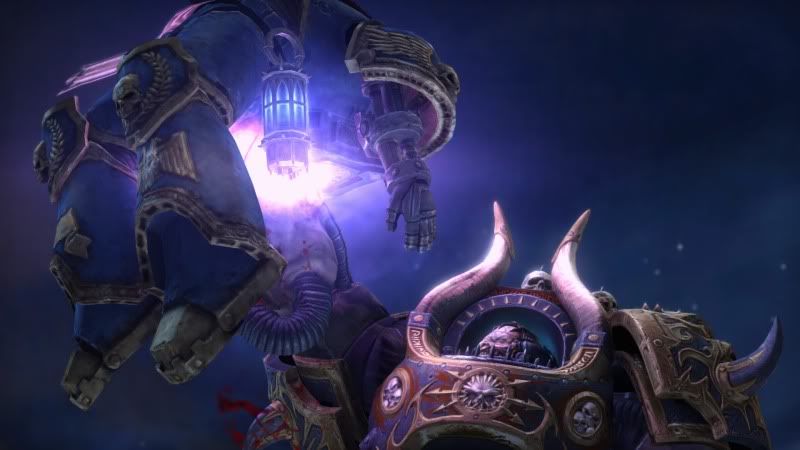
Space Marine is a third-person action shooter with combat mechanics similar to Rocksteady's recent Batman titles. It is Relic's first attempt at approaching the franchise using this genre and they did a fantastic job. The detail was extraordinary and, whilst the campaign was pretty short, the multiplayer served as a fun distraction with its competitive and co-operative elements.
It drops in at number ten for numerous reasons. Whilst it did the 40k universe justice, I felt that the campaign could have had more combat variety. The weapons, despite being brutally satisfying, were very limited, as were the combat moves. The multiplayer also lifted many of its features from games like Call of Duty and Gears of War's Horde mode (Exterminatus). Despite those shortcomings, Space Marine successfully tied together satisfying mêlée combat with solid shooting mechanics. Couple that with jaw-dropping executions and beautiful environments, and you have a sleeper hit on your hands. I can't wait to see what Relic does with this franchise.
9: Bulletstorm

Bullestorm is a unique first-person shooter that focusses on killing with skill. Generically shooting enemies to progress is out, and performing perpetually-interesting moves to decapitate, obliterate, incinerate or otherwise maim your opponents is in. Also, dick jokes.
Bulletstorm received massive criticism due to its humour and absurd format of first-person shooting. Sure, the funny bits were pretty dry, but think of it like the movie Snakes on a Plane; the whole thing is one big joke. The shooting is also rather great, but you can't play it like a conventional shooter where you shoot a target dude until the life bar depletes. Bulletstorm doesn't work like that, and if you play it as such, you'll despise it.
For me, Epic's extremely under-appreciated title pleased me with its style and surprisingly funny dialogue. Never did I think a FPS could change the formula into such a winning concoction. Using the environment to manipulate and slaughter your opponents? It might not be for everyone, but you'll never know whether you love it unless you give it a spin.
8: Orcs Must Die!

Robot Entertainment's Orcs Must Die! is a third-person tower-defense-esque game in which you control a Warmage. A really stupid Warmage. Your master slipped and fell on the steps, thus leaving you to fend off the relentless assault of Orcs who are seemingly allergic to fire.
Seriously. I heard one of them say it.
Whilst tower-defence games are literally a penny a dozen, Orcs Must Die! provides an excellent variation on the genre. By utilising traps instead of towers and allowing you to fully control a character who can use various talent trees and engage in either physical or magical combat, this game stays fresh for its duration. Throw in extra levels, traps and monsters via DLC, and you have a game that you'll be playing for hours upon hours, and for a ridiculously low-price too. Trust me when I say that Orcs Must Die! is one of the best in the genre.
7: Dark Souls

From Software returns with the brutal successor to the PlayStation exclusive, Demon's Souls, 2011's Dark Souls. Bordering on ridiculous as far as difficulty goes, Dark Souls takes you into a unique world where you must combat demons and all other forms of monstrosity with very little assistance. Survive long enough and you might just become stronger to journey into the next room. What's that you say; you died at the hand of a skeleton? You're screwed.
Next to Bioshock, the Souls titles are the most atmospheric games I've ever played. The art design, the ambiance; everything about these games screams style, and it works. Dark Souls is terrifying and that's mostly because it's a game that embraces a lost style: discovery. As you continue to discover more and more about a certain region, you begin to understand the game itself better, as well as your limits. Never have I felt so rewarded for defeating a tough monster, and so betrayed in dying to a standard enemy. Although the multiplayer was broken at release, Dark Souls is such a unique experience that you do yourself a disservice if you miss out.
6: Dynasty Warriors 7

Have you ever laughed out loud at a game on the brink of release? I certainly did with Dynasty Warriors 7. A notorious joke within the industry, countless Warriors titles have released, and hardly any have been in any way worth praising. Surprising as it may seem, Dynasty Warriors 7 is the exception, and has unbelievably steered a sinking ship in a respectful direction. Yes, it's still a hack-and-slash game and, yes, it still has some pretty bad voice acting, but I'll be damned if I don't say that Koei did an outstanding job with this one.
As detailed in my review, one of the biggest selling points for me was online play, a first for the series. Even better, Koei actually took the time to refine the gameplay and eliminate the fluff that the series was known for. The story mode for each kingdom was confusingly addictive and the cut-scenes were crafted in a delightful way. With hours upon hours of relatively simple gameplay, Dynasty Warriors 7 was probably the biggest surprise of the year.
It also contains the best capes in gaming. Seriously, take a look.
5: Gears of War 3

Having composed the final entry in the Marcus Fenix story-arc, Gears of War 3 is the end of the story that all Gears fans know. Until this point, Gears had its highs and lows, but this game truly delivers on all fronts. As emotional as it is fulfiling, this is the definitive example of how a series should wrap things up.
It's hard to think that the third entry is Epic's swansong for the series. Whilst it most definitely won't be the last game we see in the Gears universe, Epic has done a fantastic job of sending it off. Four player co-op? A refined multiplayer experience with dedicated servers? A skilled author composing the story? Everything Gears of War 3 brings is the best of the series, and the only way you'll know is to play it yourself.
4: Dead Space 2

Renowned engineer Isaac Clark and the very angry Necromorphs both return in the much anticipated Dead Space 2. Having lost seemingly everything in the Ishimura incident, Clark wakes to find his nightmare renewed and, of course, he's the only one with the knowledge to stop the growing threat. Scary, atmospheric, technologically superior and, most of all, fun, Dead Space 2 is a worthy instalment to one of the better third-person titles available to gamers.
To this day, Visceral's creation is yet to be matched by an equally-fun and jump-worthy third-person shooter. The first Dead Space took many of its cues from the superb Resident Evil 4, but while that series has somewhat lost its course, Dead Space has evolved with the rest of the gaming industry and put out an incredible sequel. Although its multiplayer is forgettable beyond measure, the single-player experience never wavered in quality, and that's what really matters.
3: The Elder Scrolls V: Skyrim

Every Elder Scrolls game is huge, and Skyrim is no exception. Taking cues from the ways that games have changed, Bethesda has streamlined their seminal franchise to cater to all types of play-style and gamer. Couple that with an intriguing story, beautiful technology, and discovery elements that have been lost since Morrowind, and you get Skyrim, one of the best games of the year.
I have yet to finish an Elder Scrolls game, but Skyrim might just be the first game to break that mould. It certainly has its faults and glitches, but even those are not enough to sway my recommendation. You can play this game however you want, and with the death of the awful, awful level-scaling system present in Oblivion, even I can enjoy this game.
2: Mortal Kombat
/mortal-kombat-9-screens-2_004.jpg)
You're reading the words of the most loyal Mortal Kombat fans out there. Yet, I never thought that Mortal Kombat could drag itself out of the abysmal hole that it dug itself into. But I was wrong. If you know nothing about Mortal Kombat - and if that's the situation, shame on you - understand that this game's accessibility is unparalleled and contains everything that made the old games memorable and great. Which largely means that Liu Kang isn't a zombie this time.
Foregoing the 3D style and retracing its steps back to the original days, Mortal Kombat is a masterclass in what a fighter should be. Not only does it give you the best story that any fighting game has ever seen (no, seriously, play it), but it is also loaded with unlockables, challenges and DLC that doesn't suck. The only thing holding this game back from perfection was its rather awful online component. Constant disconnection is enough to dissuade anyone from trying to compete online, but if they can get this right next time, then I can't wait.
1: Bastion

You might laugh, but my number one game this year is a downloadable title that will take you less than ten hours to play through. Regardless of its duration, you cannot measure the importance of quality in a game, and Bastion achieves that quality to the highest degree. Supergiant Games hasn't created a great title, they've created an incredible one.
Akin to some of my old favourites, such as The Secret of Mana, Bastion is an action-RPG that knows the ropes. Everything from the music to the combat feels right, and the story is mysterious enough to make you want to continue on your adventure to discover more about its surreal environment. Whilst it isn't the longest, deepest, most addictive or largest game out there, Bastion is composed so professionally that anyone can get into it. Saying that, if you've yet to skim the surface of this exceptional game then please, do so. Now.
Labels: Andrew Whipple III, Bastion, Bulletstorm, Dark Souls, Dead Space 2, Dynasty Warriors 7, Gears of War 3, Mortal Kombat, Opinion, Orcs Must Die, The Elder Scrolls V: Skyrim
- Andrew Whipple III

Late to the party, you say? 2011 may be dead and buried old news, but forgive me; I've only just built up the courage to say what I'm going to say.
You see, I'm not a man with splitting opinions, a vicious tongue or a mind for devil's advocacy. I like what I like, and generally that tends to be what everyone else likes. You'll find no 'Homefront was the bestest game evar!' antics from me. But in a year that granted me the gift of Batman: Arkham Asylum, the cherished delight of Portal 2 and the unforgettable, unconquerable, unbelievable Skyrim, amongst a glittering sea of celebrated gems, it was a coma-fuelled carmageddon that gave me the greatest joy.
Driver: San Francisco is a throwback in pretty much every way possible. The story itself harks back to the vibrant, garish and funky, beat-heavy 1970s, where everyone was either pushing coke or doing dope or being a dirty cop or doing something illegal and slightly hilarious. There's also the gameplay, which doesn't burden the player with muddy motion control, sloppy shooting mechanics or faulty free-roam. You drive, and occasionally you'll press a button, move the camera over another car, and press a button. Then you drive again. It's pure, clean and fresh. Whilst most modern titles cram the back of their game boxes with trademarked UltraCrap™ features ("now with 50% more green-brown textures!"), Driver had you, a car and a beautiful city. To top it all off, this is Ubisoft Reflections' last attempt at reviving the lifeless and much spat-on corpse of the Driver series; from the golden age of the ultimate PS1 cop-chase emulator, Driver has fallen hard, shooting itself in the foot with the awkwardly-titled Driv3r and then proceeding to maul its own limbs off in desperation with Parallel Lines and 76. When it was announced that the latest Driver would be a retro throwback to San Fran's heyday, all coddled up in the mind of coma patient John Tanner, eyebrows raised. When the game released, jaws dropped.
Well, mine did at least. See, 2011 was a wonderful year. Not if you were a dictator, or a Middle Eastern rebel, or near an earthquake hotspot, or Amy Winehouse, or pretty much anyone else in this sickening world slowly trudging to your inevitable anti-climactic demise. But, for videogames at least, it was damn exciting. Needles plunged into eyes in Dead Space 2, robots plunged into fiery pits in Portal 2, elbow-daggers plunged into cyborg motherboards in Deus Ex, and Skyrim plunged the world into a fury of 'Fus Ro Dah'-ing and wishing their cats could dual-wield. There was fierce competition, no doubt about it. But Driver: San Fransisco stole my heart and drifted across the Golden Gate bridge with it. And I'll tell you why.
You knew what Dead Space 2 was all about. If you had hands, or even eyes, well before your clammy palms had caressed your controller of choice you knew Dead Space 2 was about kicking alien ass and taking alien names. Maybe you'd completed Dead Space (2008), or just played the demo, or even caught a fleeting glance of a trailer, but any semblance of surprise had been squandered long before you ever played it. You knew how it would feel to decapitate an otherworldly head, and fly about in zero-gravity, and what Issac would say, do, think, whisper, murmur, smell like; the corpse of Dead Space 2 was examined and pored over long before its release into the big wide world. All the grand games of 2011 had the same issue: hyped beyond excess, with endless trailers, walkthroughs and interviews to feast upon, your appetite was spoiled before the main meal. I'm a huge Skyrim fan, and the game itself is unconquerable colossus of scale, and yet killing my first dragon didn't feel all that special. Because only a few months ago, I'd watched Todd Howard do the very same.

Driver: San Fransisco didn't have that problem. I'll choose my words carefully so I don't offend any hardworking Ubisoft employees, but... how do I put this? The game was shoved into a grimy corner to die a lonely death. Advertising was basic; no grand statements spilled from Martin Edmondson's - creative director - mouth; there wasn't a new trailer every thirty seconds. I knew a bit about the game, but I certainly hadn't followed it with the same wide-eyed vigour as I had with the better-endowed releases that came before it. It was brilliant.
When I got the game, seamlessly swinging sideways around San Francisco's sunbathed streets was an absolute thrill. Leaping from car to car in comatic fury was a real joy, whilst the good-cop/bad-cop (or in this case, white-coma-cop/black-sassy-cop) relationship - filled with sharp one-liners and just enough homoerotic tension to emulate all those 70s buddy movies - was riotous fun. With no expectation or preconceived notions, Driver: San Fransisco had an empty stage on which to wow the player, and it did so with all the tricks it could stuff up its sleeve.
The crux of the game had to be the side-missions. The main plot was tongue-in-cheek, bizarre, over-the-top brilliance, with interweaving threads of stolen ammonia and hospital beds. But to keep you interested, there had to be stuff to do, and I'll happily hold my hands in the air and claim that Driver: San Fransisco had the best side missions of any game I've played for a long, long time. Whilst Skyrim had you traversing endless load screens as you fast travel, enter a building, talk for a bit, leave a building, fast travel, find some treasure, fast travel, speak to a guy, and so on and so forth, Driver makes every side mission an attention-grabbing, emotionally-involving rollercoster. Who could forget Jun and Ayumu, clumsy Korean kids who accidentally get themselves embroiled in vicious street-races? An ageing truck driver nearing retirement who is caught up in a Speed-style bomb threat? An unfortunate husband unwittingly driving an adulterous wife to a lesion with her lover?
They each had spirit. They each had flair. They each had soul. Every single one of them felt crafted, sculpted and born out of love, and you find yourself becoming more and more involved in these characters with every lightning-fast second. I shouldn't care about these people! Whole games devote themselves to creating sympathy with a block of pixels, yet fail with a fizzle; Driver: San Fransisco, with a sharp script and colourful characters, grabs you and doesn't let go.
That's without retracing the fleet-footed main plotline, that's so brilliantly tongue-in-cheek yet straight-faced that you can't help but admire Ubisoft's gumption. Going from the meandering countryside roads of automobile shifting fun, through narrow back-alleys of genuinely disturbing plot twists ("Christ - he's everywhere!"), hurtling down the open highway of one of the most thrilling climaxes of the year - Driver was an utter joy to behold.
There are hundreds of honestly superb games out there. Games with blockbuster budgets, Spartan-sized teams and the community's eyes focussed dead on their every move; these types of games are wonderful to play and technically proficient. But when was the last time a game rocketed out of the blue and knocked your socks off? When was the last time you were properly, genuinely excited by the game you were playing, full of wonder and possibility and brimming with the unknown? Nowadays, those games are harder to come by. And all the more incredible for it.
Labels: Chris Hawke, Driver, Driver: San Francisco, Feature, Opinion, Ubisoft
- Chris Hawke

For nearly the entire calendar year, the Call of Duty and Battlefield franchises have been at war.
Similar to the Sega vs. Nintendo days of yore, it’s a pitch, knock-down battle for supremacy; the two companies have launched ad campaigns taking none-too-subtle jabs at each other, and gamers are digging in and choosing a side, ready to defend their favourite franchise and see the opposition go down in defeat.
This has to stop.
Seriously, folks, I’m all for good, healthy competition, but what’s going on between Battlefield 3 and Call of Duty: Modern Warfare 3 is just plain ridiculous. It goes beyond competitive rivalry and turns into something out of bloody Amadeus. The antagonism on behalf of either franchise is colossally wrong-headed, and it would be in everyone’s best interest if gamers put down their torches and pitchforks, and let both games be.

First of all, this battle doesn’t make our industry look good. Though gaming has slowly risen to a place of prominence in the last five or ten years, it isn't yet quite as ubiquitous as movie-watching or listening to music, and there’s still plenty of room for outsiders to get the wrong idea about gaming culture. I can’t imagine it speaks terribly highly about our industry if its fans are willing to act like jackasses in defence of a multinational corporation, who would just as soon suffocate under their large piles of money than give specific attention to those dedicated to besmirching their competitor’s name. We’re just starting to be seen by the rest of the world as more mature; let’s act like we deserve to be treated that way.
I also can’t think of any other industry that pits its competition head-to-head in such a petty manner. At no point in 2006 did Warner Bros. point at 20th Century Fox and say "Hey! Our movie about magicians in the early 1900s is way better than yours!" Neither do book publishers declare that their new novel is 'better' than an already-established series ("puts James Patterson’s Women’s Murder Club books to shame!"), and whilst it’s hardly unusual for recording artists to enter into disputes, they rarely involve direct album comparisons. These industries appear more confident about their products, and about their ability to coexist with consumers. Fans may argue about whether Star Trek or Star Wars is 'better', but these discussions are most often held between consumers, which is a far cry from having a quarrel perpetuated by the films' own studios.

Besides, if you were to sit down and play both Battlefield 3 and Call of Duty: Modern Warfare 3, you would quickly find them both to be different and complementary experiences. Battlefield’s multiplayer-focussed shooter offers much more in the vein of wide-open spaces and free-form combat options, whilst Call of Duty places a greater emphasis on tight, twitchy action. True, both games are modern military shooters with straightforward, set piece-driven single player modes, but they both accommodate largely different play styles, resulting in two different gameplay experiences.
Which leads me to my main point: it’s okay to like both. How very basic it sounds, but how true it actually is. Getting caught up in EA and Activision’s trumped-up battle of the shooters can be great fun, but it can also result in players missing an important truth: that both games are fun, top-notch experiences, and each is worthy of your time. Personally, I alternate between the two, depending on what I feel like playing. Perhaps you can only afford one game, and need to pick between the two; choosing one over the other is fine, but liking one game doesn’t preclude you from enjoying the other.
Perhaps I’m being a curmudgeonly sod, but the whole 'one versus the other' thing just smells of stupidity. Too much time, energy, and Metacritic User Score credibility has been sacrificed to a conflict that does not matter in the grand spectrum of gaming. Both games are out now. Buy them, or don’t. Like them, or don’t. But dragging out this pissing contest of a sales matchup is unnecessary, not to mention stupid.
Labels: Andrew Testerman, Battlefield, Call of Duty, DICE, Infinity Ward, Opinion
- Andrew Testerman

I am a big believer in the positive aspects of gaming. I’ve defended my hobby both in person and on the net, and I truly feel that videogames can have a palpable, positive effect on people everywhere.
Recently, I was pleasantly reminded of this fact, thanks to the little downloadable game that could, Trine. Trine is a PSN game (developed originally for Windows PC) by Finnish developer, Frozenbyte. In the game you take control of three heroes, each of whom have been bound together by the mystical Trine. As a result of the magic spell of the Trine, a knight, a thief and a wizard are forced to share one body, and must work together in order to traverse platforms, solve puzzles and defeat enemies. The main concept behind the game is that you can - and must - freely switch between any of the three characters, but can only control one of them at a time, forcing you to use your head and think about which character’s ability you need to get past a specific challenge.
Trine was one of the first downloadable games I ever purchased. The game enamoured me with its beautiful graphics and its old-school, 2-D platforming; plus, since the game allowed up to three players to play locally, I figured it would be a great chance to convince my boyfriend to join in on the gaming fun.
It’s been a concerted mission of mine to turn my boyfriend into a pseudo-gamer of sorts. I have had varying degrees of success. Fighting games he can manage, as long as you don’t force him to choose more than one character. It still surprises me that, to this day, when I play Mortal Kombat with friends and they choose anyone other than Zub-Zero, I had forgotten that such a decision was even possible. Shooters have also been a success of sorts, and we’ve logged hours upon hours playing Resistance - it has become quite evident that shooting aliens in the face is something that makes us a better and happier couple.
Trine was one of our earliest co-op experiences, and I kid you not, gamers, but that game taught me more about us and our relationship than I care to recall.
Before we go further into this, there are a few things you should know. I am not what you might call a 'patient' gamer. If you see me flipping a switch, grappling off a wall and double-jumping over a fiery pit onto a platform, I expect you to do the same. Damn it, how hard could it be?! You just saw me do it, didn’t you? I sometimes forget that not everyone has been doing this since they were five.
Case-in-point: my boyfriend. The poor shmoe owned a Nintendo with a copy of Mario Brothers a few eons ago, and that’s basically where his gaming-jedi training ended. And, although talented in many areas – the man makes a mean apple pie - when it comes to games, a fast learner he is not. As you can imagine, in a game in which three heroes share one body, throwing two gamers into the mix only confuses things even further. Co-operation and communication are key. The players, like the characters of Trine, have to find a way to share the three heroes and their abilities, and act in unison towards achieving their goal.
I think it was maybe after the fifth consecutive time that I plunged to my death, after my significant other conjured a box directly over my head with the Wizard as I attempted to manoeuvre over some platforms, that I very seriously thought it was time to reconsider this whole 'relationship' thing. "It’s just a game!" he protested. "Why are you so lame at this!?" I yelled. It didn’t take much more than that, and a full blown fight was on. Over Trine. Over a game. But not really.
Turns out it wasn’t so much that we were having trouble communicating during our Trine gaming session, but rather we were having trouble communicating in general. I was not only an impatient gamer; the fact of the matter was that I wasn’t a patient boyfriend. As for him, it became pretty evident that he was hesitant to follow my lead during Trine, because, in a lot of ways, he wasn't too keen on following my lead at all. We had run into a problem here; a puzzle of considerable challenge.
Here’s the thing though. We both wanted to make it work. We both wanted to beat Trine, so to speak. Trine became a metaphor for our relationship and its creases. So we took a step back. We took an inventory of what our strengths and weaknesses were, and reassessed that puzzle. Long story short, we beat that puzzle and kicked Trine’s ass.
A few days ago, we started playing Trine 2. Every now and again, a random box will be conjured directly over my head. And yes, many a digital death has ensued as a result of his inherent noobness. But he’s getting better, and I’ve learnt to sit back and enjoy it all. I’ve stopped trying to turn him into a fully-fledged gamer (sort of), and instead I've begun to enjoy the simple joys of gaming with my significant other. As a result, the yelling to laughing ratio has been flipped on its head.
Trine, and gaming in general, has not only helped my relationship, but has provided me and my boyfriend with a hobby that not only allows us to spend time together, but that forces us to work together as a unit, to communicate or fail, that gives us ample opportunities to help each other succeed and to share triumphs. And that's certainly not bad for a pastime that has a reputation for turning us all into a bunch of antisocial loners.
Labels: Feature, Joey Núñez, Opinion, Trine
- Joey Núñez

On the morning of November 2, Rockstar gobsmacked the gaming community with the announcement trailer for Grant Theft Auto V, a quick, teasing look at the publisher’s newest tale of guns, cars and criminal activity in the big city.
Twitter and the gaming press were absolutely alight with speculation about the title’s story, how the actual game will play out and what other possible elements might have been hinted in the minute or so of footage released. This sort of behaviour is far from unexpected; Grand Theft Auto is one of the industry’s most popular franchises, and it only makes sense that the announcement would be greeted with such enthusiasm from the gaming community.
So why don't I feel that excited about it?
I suppose I shouldn't be so surprised; the Grand Theft Auto titles aren’t my gaming sweet spot, and never really have been. Granted, I've had my fair share of mayhem-causing sessions in GTA III and Vice City back in the day, and I can definitely appreciate the expert craftsmanship the Rockstar applies to all of its titles, as well as why so many people love the franchise so dearly. That said, the GTA series just doesn't click with me in the way that it does with over 22 million gamers worldwide, and I'll do my best to try to explain why.

For one, Grand Theft Auto titles have always been too big for my taste. By this, I don't mean that the play areas are too big - one of my favourite parts of The Legend of Zelda: The Wind Waker was sailing around and exploring the humongous map - but, rather, that there's simply too much of it. The sheer amount of time and willpower I need to commit in order to experience more than a small portion of what a Grand Theft Auto game offers is staggering, and something that I can't quite get around. Certainly too much of a good thing can only be a good thing, but GTA for me has always been too much of a... thing.
This is because I never know whether it's good or not. Any given GTA experience (and I've played III, Vice City, San Andreas, and IV) always leaves me feeling like I've been spinning my wheels, peddling along until maybe, maybe, I'll get to the 'good part' of the game. A similar complaint can be lodged against JRPGs or the Zelda series, two of my very favourite things in gaming. What makes GTA different, though, and worthy of my ire, is how empty the experience feels between bouts of plot; I always feel like I'm performing disposable tasks in order to get through the game, none of which, taken by themselves, are very fun. Again, you can lodge complaints against nearly any JRPG, but while JRPGs are at least understood to be more deliberately-paced, measured affairs, GTA is ostensibly about action and explosive moments, which makes the mostly-passive missions feel even more like a dishonest sleight of hand.

Perhaps this is the difference between a guided experience (Zelda) and an open one (GTA, Elder Scrolls, etc.), and their place in my gaming lexicon. The Zelda series dictates what sort of gameplay experience I have: what choices my character makes, what dungeons I play through in which order, and what items I need to use in order to progress. This simplification of choice allows me to get caught up in the journey, and to invest myself in the story being told to me. In Elder Scrolls, I'm in charge of charting my own course and telling my own story. While many gamers may feel liberated by the breadth of choice they are given to decide their own fate, I get stressed out by the number of decisions I need to make in order to drive the experience, and fail to get caught up in anything.
Furthermore, I’ve never really been satisfied by GTA’s brand of story-telling, either. I've always felt that GTA's story and pacing have suffered, in favour of its open-endedness. Videogame storytelling at its best is often comparable to a novel, with character traits coming naturally over the course of the narrative; titles like Chrono Trigger and Uncharted have a coherent, measured plot full of well-realised characters. Storytelling in the GTA games, by contrast, always feels comparable to a comic strip, with characters broadly and instantly defined from the moment we first meet them, and handled in bite-sized chunks; only over the course of the games do their subtleties peek their heads out, and only if the player is willing to meet the game halfway and watch for the subtle shades. Because the stories are so stop-start, and the story-telling so shallow, the narratives often feel like they lack urgency and pacing, making them less than compelling, and creating a profound disconnect from plot.

For their newest entry, I hope Rockstar looks to the Assassin's Creed series, and to Batman: Arkham City - two titles I enjoy immensely despite my general aversion to open-world games - for inspiration on how to handle Los Santos in the upcoming game. Assassin’s Creed uses an open world similar to the GTA games, where missions are doled out from side characters found on the main map. However, while GTA missions can often feel tangential to advancing any sort of plot (watch a cutscene, drive somewhere, kill someone, drive back), Assassin’s Creed II and Brotherhood work much harder to give each gameplay segment a context within the narrative, even if the objective is as simple as 'follow this dude over there'. Arkham City, on the other hand, gives players entirely different areas for the game’s main missions, in addition to an enormous, dense world for gamers to explore, segmenting off the main play areas to help present more and different gameplay opportunities than if Batman were forced to chase down The Joker on the actual streets of Arkham City.
I get why people love the Grand Theft Auto games. Rockstar is perhaps the best in the business at crafting living, breathing worlds for players to lose themselves in; a friend of mine says he put literally hundreds of hours into faffing about in GTA IV, simply because he enjoyed the world so much. The game is going to be a smash, and I’m glad that so many gamers find enjoyment in GTA, with all of the freedom, chaos and goofiness that the series entails. I just hope that Rockstar can give the series more focus, for those of us who want more than simply the opportunity to wander around.
Labels: 2011, Andrew Testerman, Grand Theft Auto V, Opinion, Rockstar, Trailer
- Andrew Testerman

It’s a very rare occasion indeed when game developers take it upon themselves to craft engaging licensed games. Normally when a company lands the rights to develop a game based on a popular TV, movie or comic property, what you get is complete and utter rubbish. The game developers figure that the licensed property has an established fanbase who will buy the game regardless of its quality, and are left with pockets full of cash. Whilst that fanbase we talked about; well, they're left with a poor or mediocre product and an overwhelming sensation of frustration.
But there are some rare occasions when developers who are truly passionate about the property put in the time and the effort necessary to craft a quality game. It seems that everyone thinks of Batman: Arkham Asylum when making this argument, and hell; they’re right to do so. Batman: Arkham Asylum is the shining example of the licensed game done right. All any Batman fan ever wanted was to play a game that made him or her feel like Batman, and although that sounds easy enough, it seemed to be nigh impossible. Until, that is, Rocksteady came along. The company blew everyone away with Batman: Arkham Asylum, and gave me hope for the future of licensed games.
How far does this hope go? To the point where I believe that out there, somewhere, there is a game developer just waiting to make truly epic games out of some of my favorite TV shows. If the necessary time and effort are put in, these five awesome shows could be five awesome games of the future.
Editor's Note: Yes, yes, we know: both Game of Thrones and The Walking Dead are set for videogame releases. Consider Joey's narrative on those two games as reasons why the development of those games is an excellent idea.
1: Nikita

Nikita is the badass superspy who just keeps on giving. Nikita first reared her gorgeous head and designer shoes back in 1990, in the French thriller Nikita, from Luc Besson. The movie is awesome, and a U.S. remake titled Point of No Return soon followed. A Canadian TV Series was developed in 1997 - La Femme Nikita - and, just recently, the CW network in the U.S. decided to revisit the Nikita universe with their new 2010 series, which ended its first season a few months ago. Moral: people can’t seem to get enough of the sexy assassin with the peculiar name.
So what’s all the fuss about? Well, if you’ve never been exposed to any of the shows or movies listed above, I’m happy to fill you in, but seriously; get a decent cable company to visit your house. Our heroine’s story goes something like this: she was a girl at the end of her tether, a young junkie tried and convicted for murder, with nothing to look forward to. Desperate, Nikita accepts the offer of a mysterious organisation; they'll get her out of jail, in exchange for her “services”. Said organisation, known in the current series as Division, proceeds to train Nikita as an assassin and all-around general badass spy. Everything is fine and proper (people are being killed and the bosses are happy), until Nikita falls in love and develops a conscience. Division proceeds to execute the obvious solution, and assassinates Nikita’s fiancé. Now the top Division agent has gone rogue, and is on a one-woman mission to take down Division.
Martial arts, gunplay and spy tech gadgets all play a role, and they're all awesome. Also, Maggie Q plays Nikita. Yup; I don’t even like girls and I think she’s hot-tastic. This show is incredibly stylish, packed to the brim with highly-cinematic action sequences and featuring more twists and turns than a Mexican soap opera. The recipe for an incredible videogame is set; put this puppy in the oven for an hour and bake to perfection.
What needs to transition from the show to the game is the stylish action. Nikita is very capable with guns, but also highly adept with martial arts. Few games have been able to tackle a marriage between the two elements, but with Arkham Asylum-esque fistplay and stealth, coupled with some Uncharted gunplay and all mixed in with the face of Maggie Q, I don’t see what the holdup is.
Another important element is the story. With just one season under its belt, Nikita has gained some rabid fans; we care about this girl, and if we’re going to devote hours to playing a game, the character must be on an adventure we care about as well. Suggestion: the show kicked off with Nikita already outside of Division - how about we play as a rookie Nikita learning the ropes, right up to her fantastic escape from the Division compound? Yup, that'd be epic.
I’ll take my commission in cash, please.
2: Game of Thrones

Okay, so I’m not going to sit here upon my nerd throne and pretend that I read all the books in the A Song of Fire and Ice series, which the HBO series Game of Thrones is based upon. Heck, I wasn’t even aware that the series existed until I started watching the show. However, that said, oh my freaking God this show is amazeballs.
Set in the Kingdom of Westeros, a mediaeval land filled with intrigue and swords, Game of Thrones should be considered the slightly more grounded cousin of The Lord of the Rings. Like Nikita, Game of Thrones just ended its first season, and with the incredible production value and raw nature HBO is known for, it's promising to be a keeper. Intrigue is the name of the game here, with fantasy and magic playing second fiddle, as everyone who’s worth knowing is seemingly after control of the Iron Throne of the Westeros Kingdom. But underneath all the intrigue, you have dragons raising in the east and mysterious creatures threatening to attack from the north. The stage is set for awesome, and I like my awesome in an interactive flavour where possible.
The Game of Thrones mythos is so expansive - there are five books in the series of novels already, with a sixth on the way - that there are hundreds of places from which to draw inspiration story-wise. If it were up to me, I’d go with an action-RPG game, along the lines of the Elder Scrolls series. Cast the main characters of the show in supporting roles, and let the player run wild in the Kingdom of Westeros. Perhaps defend the throne? Or maybe fend off an attack from the North? Add the possibility of shifting your allegiances and you’ve got yourself a game wealthy in content.
3: Fringe

First things first. Fringe is an incredibly high-quality sci-fi show, and if you have any interest whatsoever in the genre, you should be watching this show. Get on it.
The show follows a haphazard team of FBI agents who investigate strange cases related to Fringe Science topics - everything from telepathy to astral projection, and even time travel. What makes the show so special is its main underlying plot. In the world of Fringe - beware, explorer, spoilers lie ahead - there is more than one of everything, as our characters discover that they exist in one of two parallel universes. For reasons I’m not going to get into now, the wall between the two universes is cracking, causing more and more Fringe events. In one universe this leads to strange accidents and mysterious deaths; in the other, catastrophic events such as black holes.
Fringe does have its fair share of gunplay, and this could conceivably play a role in the game. However, what really drives the show is the investigation the characters undertake into every fringe event, so if I had my way a Fringe game would be a sort of Heavy Rain-type adventure game, with each Fringe Event being an investigation the player must solve. Couple this with some cinematic action sequences and the ability to shoot up the show's nasty shapeshifters, and a gameplay style true to the show could be crafted.
As for the story, the game developers could take full advantage of both universes, letting us play with our heroine, Agent Olivia Dunham, in both planes of reality. Perhaps the dual Olivias could be investigating fringe events in both universes which are related somehow, caused by the a mysterious big bad. There are plenty of moments within the second and third seasons which could be placed into a potential videogame's storyline, without messing with the show's continuity. If done right, this would be one worthwhile game for Fringe fans and non-fans alike.
4: Supernatural

Sam and Dean Winchester are just your typical all-American boys, brothers who have decided to pick up the family business. What is the craft their dad so lovingly handed down to the Winchester boys?
Demon hunting. Hell yeah.
The Winchester brothers travel across the good old U.S.A. in their trusty 1967 Impala, crossing paths with everything from vampires to ghosts to angels. That’s right, these boys have fought (and defeated) angels. How’s that for a résumé? Given the way that the narrative of the show is structured, the game can be faithful to the show’s mythos whilst still creating an original and engaging story. As long as the nature of Sam and Dean’s relationship is maintained, and the brothers' interactions ring true to series fans, it should all work out.
As for the game style, I can see Supernatural being a sort of open-world game, featuring maybe two towns and a city, like the Assassin's Creed series. The Winchester brothers could ride into town chasing a big bad, and find that there are all sorts of supernatural phenomena to deal with along the way, nicely opening up the game to main story missions and sidequests. Combat should be handled like a third-person shooter, although the game's developers must make sure to offer the right weapons for the task; not all demons are created equally, after all, and the same kind of kill shouldn’t work on all of them.
5: The Walking Dead

Based on an incredibly awesome comic series, the folk at AMC have given us an incredibly awesome show as well. All I’m asking for? An incredibly awesome game to boot.
In The Walking Dead, the inevitable zombie apocalypse – it's certain to happen sooner or later – has hit, and the world as we know it has basically ended. In other words, the shit has hit the fan. Our hero is Rick Grimes, a deputy in a small town in the state of Kentucky, who wakes from a coma only to find that the world has ended. He sets out to find his son and wife and succeeds, joining a small group of survivors, who continue to try and do just that: survive.
Zombies are old hat by now, true, but what sets The Walking Dead apart is its heart. I’m talking a zombie game with an actual human, heartfelt storyline, something that Resident Evil, for all its triumphs, could never accomplish. Our hero is not just trying to kill some zombies and score some headshots; he’s trying to protect a group of people that depend on him. If this can be translated into the game, the stakes are automatically higher.
But, then again, maybe the game doesn’t have to follow the story of Rick Grimes. It could just as well be set in the same world, and follow a new group of survivors. If the emotional undercurrent of the show can be established by the game developers with a new group of survivors, then I would have no complaints. Besides, we’re all waiting for the zombie game to end all zombie games; it might as well be based on the best zombie-related property out there.
So there you have it guys; the five TV shows which I think could make worthy transitions into our gaming libraries. Have any shows of your own you’d like to add, or maybe you'd like to tweak with the ideas for the shows listed above? Sound off below.
Labels: 2011, Feature, Fringe, Game of Thrones, Joey Núñez, Nikita, Opinion, Supernatural, The Walking Dead, TV shows
- Joey Núñez
Subscribe to our content
and never miss a single thing

 subscribe to our monthly newsletter:
Our most recent writing

Our most recent reviews
Recent comments
All comments are subject to our commenting policy
Latest videos

Subscribe on YouTube

GGTL Classics
Some of the very best articles dug out from deep in the GGTL archives, written by some of our past and present wordsmiths alike.
Your continued use of this website and/or any others owned by Gamer's Guide to Life.com represents your acceptance and indicates your full understanding of all of our legal policies and terms. Our legal policies and terms are legally binding. If you in any way disagree with or refuse to be bound by any part of said legal policies and terms, you are advised to leave this website immediately.