 Follow us on Twitter: @ggtl
 Join our friendly community!


Latest news

 2.5.12

Back in January, Square Enix released Final Fantasy XIII-2, a follow-up to Square’s most recent (and, in some circles, controversial) entry in the long-running JRPG series.
Reviews of the game have ranged from lukewarm to rather positive, but many of the critiques boil down to the same thing: the combat and gameplay are fun, but the story is awful.
For the unaware, the story is a direct continuation of XIII’s narrative. XIII-2 follows Serah, sister of the first game’s protagonist, and Noel, a time-travelling soldier who was sent back to avert a global apocalypse sometime in the future. Ignoring the prominent Terminator parallels, XIII-2’s story entails Serah and Noel travelling to different points in time, defeating dimension-shifting 'paradox' monsters and engaging in stilted, 'stylised' dialogue that wouldn't fly in a remedial script-writing class. XIII-2’s jargon-heavy world doesn’t try especially hard to welcome new players into the fold (though, to be fair, it is a direct sequel), and the melodramatic character interaction only further obfuscate the tale.
How far JRPGs have fallen in the past decade or so. Once the fore of storytelling in gaming, JRPGs are now bringing up the rear, with even the most highly-praised stories carrying an almost apologetic level of explanations and qualifications. Meanwhile, gamers are finding compelling plots and engaging characters in even the most action-packed genres.
It didn’t always used to be this way. Back in earlier days of gaming (by my watch, right up through the SNES), players more or less had to choose whether they wanted action or story. Platformers like Super Mario World or Donkey Kong Country were exciting and fun to traverse through, but they weren’t exactly go-to games for players looking for an emotional, involving experience. Conversely, RPGs didn’t offer thrill-a-minute gameplay like their platforming and shooting console-mates, but instead gave gamers characters, story arcs and more cerebral thrills than seeing how many coins they could collect before the end stage.
Now, in 2012, the wall between visceral action and involving story has been completely broken down (though not entirely removed). Games like BioShock and Assassin’s Creed are giving gamers compelling plots and engaging characters while still providing twitchy, fast-paced action. Meanwhile, games like Final Fantasy or Star Ocean, representing a genre once synonymous with storytelling, offer players staid, clichéd narratives and cardboard-cut-out characters. It’s all a bit backwards, really.
There are many potential discussions about what RPGs still have to offer the gaming world now (or, for that matter, what even qualifies as an RPG anymore, what with every game nowadays having some sort of XP system), but today we’re limiting it to JRPGs and their stories. Why do JRPG stories fail to hit, and what can be done to get the genre back on track?
I’ve held a pet theory about JRPG storytelling for a while now, and Final Fantasy XIII-2 helped to solidify it (funnily enough, it was Final Fantasy XIII that helped me form it in the first place). Back in the NES and SNES days, developers didn’t have the technological prowess to tell the stories they had in mind, one-to-one; instead, they needed to make concessions based on the technology available, both in terms of what could be displayed onscreen, and what their characters could say.
This creativity through limitation led to some of gaming’s most beloved titles: Final Fantasy VI; Secret of Mana; Chrono Trigger. Each of those games had a weighty, complex story, and the technological ceilings of the Super NES made it necessary that each story be told as cleanly as possible. Rather than tell it in the manner of a movie or television series, game directors and producers adopted a new kind of storytelling specifically for video games, one whose episodic, overarching structure most closely resembled a novel. This style helped present mature themes like suicide, addiction and death in an understated way that was simple enough to avoid melodrama, but focussed enough to avoid dulling their impact.
All this changed with the release of Final Fantasy VII. With the added hardware of the PlayStation, many restrictions imposed by the NES and SNES were lifted, letting directors and producers create games that adhered even closer to their creative visions. Players could explore even more expansive worlds, and characters could express themselves on even greater levels, with better animations and dialogue than ever before. Directors could tell exactly the story they wanted to tell, exactly the way they wanted to tell it.
It’s unfortunate, then, that the results have been so alienating. With the aforementioned hardware restrictions, game designers were forced to leave the Japanese-only sensibilities of their storytelling at the door, and instead created stories with broader, more universal themes.
Nowadays, traditional JRPGs are completely and totally steeped in Japanese storytelling conventions; the kind that are nigh-inscrutable to everyone but the most ardent Japan apologists and actual native-Japanese folk. In their desire to replicate their precise storytelling vision, game creators are able to emulate their favourite torrid Korean soap opera down to the most exact detail, leaving the non-Korean-soap-opera fans in the dark about the game’s appeal at all.
It’s not that JRPGs need to ape Western themes, or conform to a traditionally-Western idea of a game story. Chrono Trigger, my favourite game of all time, had an extremely strange story, involving a sentient robot, a talking frog and a cave woman fighting to save the world from a space parasite. Yet, the game’s story was — and still is — highly praised, not for its particulars but for its execution. Chrono Trigger painted its characters and story decisions in articulate, simple strokes, letting players meet the game halfway and invest themselves in its tale. For such ridiculous material, it had a pronounced level of subtlety and reservation (again, no doubt brought on by the SNES's limitations). It was broad, but sincere, and didn’t become caught up in trying to oversell itself.
Of course, it isn't as though top-tier JRPGs are in danger of becoming extinct. Quality JRPGs are still being made today, like Atlus’ Radiant Historia, a JRPG that, by all accounts, displays the exact same control and maturity that its 16-bit predecessors did. Perhaps it’s just a coincidence, then, that the most highly-praised traditional JRPG in years was released for the DS, a system with only slightly less hardware restraints than the SNES. Perhaps DS developers know something that console devs don’t?
Ultimately, if JRPGs are to dig themselves out of their current hole, they need to concentrate on what made them popular in the first place: storytelling. Not just Japanese storytelling, but storytelling that even JRPG neophytes can get wrapped up in. I’m not saying that publishers like Atlus should ditch such delightful J-games like Disgaea or the Atelier series, but I do think there should be room for both. Strong characters and compelling storytelling transcend cultures. JRPGs have since gained ground in terms of play mechanics, with games like Tales of Vesperia and Final Fantasy XIII-2 offering gameplay thrills on the level of the industry’s best. All they need to do is remember what they did better than any genre in gaming.
Watching JRPGs lose their prominence in game storytelling has been painful, but I firmly believe that great games can still be made using their template; look at 2008’s Lost Odyssey, a game that used old-school RPG gameplay while creating memorable locations and characters in a new, distinct way. Game storytelling is a broad field, with no one method standing 'superior' to any of the others, and there’s no reason why gamers shouldn’t have the option to enjoy a quality JRPG story along with the Portals, Uncharteds and Call of Dutys of the industry.
Note: for an excellent read on why JRPGs don’t necessarily need a good story to succeed, check out writer Kat Bailey’s new JRPG column on Joystiq.
Labels: Andrew Testerman, Chrono Trigger, Final Fantasy XIII-2, JRPG, Opinion, Radiant Historia
- Andrew Testerman

Spring is upon us, which means we can finally stow that nasty old snow shovel away for the next several months and pick up the Wiimote or DS a little more. Oh wait, I guess that grass isn’t going to cut itself. Crap. But, for those you who don’t have to worry about tedious Spring chores (lucky), there are some nice titles hitting the Wii in the next few months. I’m only diving into the Wii this time around because I was hard pressed to find any noteworthy games for the DS (besides Tetris Party Deluxe). I may need to delve a little bit deeper to find them, but please, if there’s one or more solid ones you know about coming in the next few months, let me know about it and I’ll put together an exclusive DS “On The Horizon” piece.
Now, onto the games…
Super Mario Galaxy 2
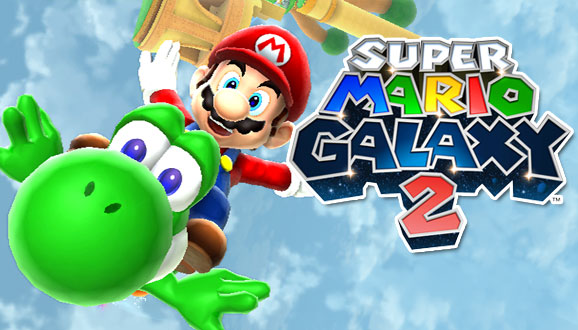
How can I start anywhere else than with the Big N’s mustachioed mascot in his big Wii sequel, Super Mario Galaxy 2? Once again you will launch yourself across the galaxy, this time travelling in your own starship, battling baddies on large and small planetoids, defying many laws of gravity, much like the first game of the series. And much like its predecessor, you will use features such as Pull Stars and reverse-gravity arrows to obtain stars in order to unlock new levels. The biggest inclusion would have to be the return of that lovable green dinosaur mount, Yoshi. As we can expect, Yoshi brings forth his usual tools such as his long and sticky tongue and the ability to power up by eating different fruits; some that make him quickly dash, inflate like a balloon, and even find secrets paths. Mario will also have a healthy new supply of power-ups, like Cloud Mario, Rock Mario, and a drill which allows you to tunnel through the ground. Don’t expect anything new as far as graphics quality or music, which isn’t necessarily a bad thing considering the first game was absolutely gorgeous to look at, and the orchestrated music was equally pleasant to listen to. Although this is a definite purchase for myself and any other Nintendophiliacs out there, I’m going to remain a bit sceptical. As fun as the game may be, and even though we’ve been told by Nintendo’s big boys that the game contains over 90% new content, right now it just doesn’t seem like enough of a break from the first game to keep it fresh. I hope the game proves me wrong, and you can definitely expect a review from me on this on. Super Mario Galaxy 2 will be released in Europe on June 11th and in the U.S. on May 27th.
Metroid: Other M

Alright, just a quick teaser here about Metroid: Other M, the next game in the venerable series. Since it is technically coming out shortly after the Summer Solstice, I won’t dive into it here, but you can expect a thorough preview as we get closer to the release date. Until then, the official website has a couple of nice trailers for you to enjoy.
Tetris Party Deluxe
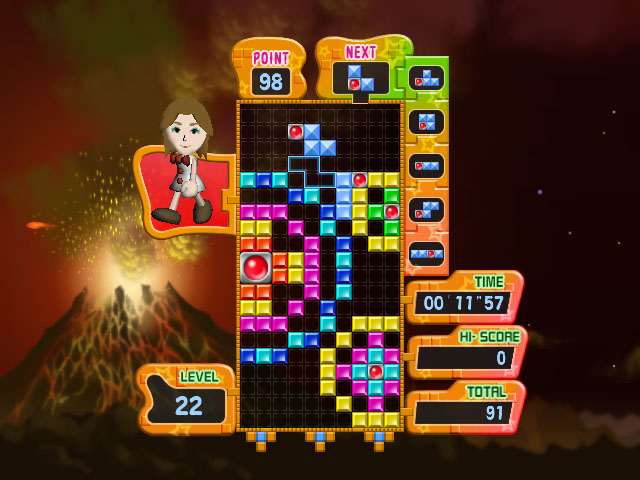
Let me move on then to another long running series, Tetris. You all know it, and most of you love it. Well, if you weren’t smart enough to download Tetris Party for the WiiWare, here’s your chance for redemption. A full-fledged disc/cartridge version of Tetris Party Deluxe is coming to the Wii and the DS, and includes all the wonderful game modes that made the WiiWare version a hit, along with even more to satiate your puzzling appetite. Add that to the full spectrum of Wii peripherals that can be used to play, and you can expect a solid solo or multiplayer experience. The Wii Speak, Mario Kart wheel, and the Balance Board are all used to make it the most versatile Tetris, or any game for that matter, available for the Wii. Remember using your bottom on the Balance Board to move around the Tetrominoes? Well it’s time to find that ass grove again. You will also be able to use the Wii Speak as a chatting (taunting) device when playing multiplayer matches. My biggest hope for this version is that Hudson and Tetris Online continue the success of the tournament they created back in December of 2008 and give us a stable mode to win prizes, or better yet a league would be killer. Sign me up! For the DS most of the game modes found on the Wii version (minus the ones that require a Wii peripheral) are also available for the DS. You can even chat in multiplayer using the microphone on the DS, so no heavy breathing… it’s a sign of weakness. Since Tetris began its legacy on a handheld, it only makes sense to bring it to the DS, and hails as one of the easiest games pick up and play, and one the best for those on-the-go gaming spurts (or long car rides). Both the Wii and DS versions are scheduled for a Q2 2010 release.
Trauma Team
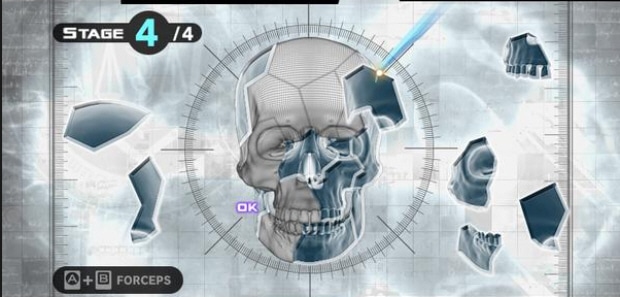
Trauma Team, an installment from the Trauma Center series, will hit U.S. stores on May 18th with no European release date set, but probably to be expected late spring or early summer. Trauma Team keeps some similarities with the other games of the series, such as the Japanime art style and comic book presentation, along with the character intrigue and overblown plotlines. Oh yeah, and the medical procedures too. The difference this time around is that you are not confined to just performing surgeries. You’ll also get to work with endoscopy, orthopedics, forensics, first response, and diagnosis, all which come with different tools for you to use. Forensics and diagnosis will bring elements of CSI and House to the anime world, as you must use devices other than surgical tools in order to solve the murder or discover the medical condition. For these tasks, instead of the patient losing vitals for poor skills, there is a limit counter which racks up any mental mistakes you make and will fail the mission if you have too many brain lapses. For the most part the characters are all new and a mixed bag of backgrounds and attitudes, which plays well with the chaotic life that is medicine. I’m saddened that there is no mention of using the WiiMotion Plus peripheral for this game. While the motion controls in previous games of the series functioned well enough, there really are more boundaries you can cross with the WiiMotion Plus. That alone may get my thumbs down after I try the game.
Arc Rise Fantasia

Finally for the Wii is Arc Rise Fantasia, a new RPG game, yet containing elements that will make gamers think of Tales of Symphonia, the Star Ocean series, and the Dragon Quest series. Now I must admit that I am not a huge fan of Japanese-style RPG games, but the lack of classic turn-based RPGs for the Wii has given me the inkling to look a little closer at this one. The Meridian Empire which you explore promises to be an expansive and full of monsters to combat. The game boasts a large roster of playable characters, all with different aspirations, which will create many different engaging plotlines. You can expect to lose about 60 hours trying to complete the game, and that’s without doing any side quests. The battles are turn-based, which although some may label as outdated, I like to call refreshingly nostalgic. During a battle sequence, all the characters use the same AP gauge to carry out their movements and attacks. There are also various combos that can be chained together, adding a nice strategic element, which definitely need to be utilised in the later levels of the game. In typical fashion, you can also summon giant beasts to carry out massive attacks. So don’t expect to see any groundbreaking new features, but if you’re a fan of the tried and true turn-based formula, this one is definitely worth at least a rental. Arc Rise Fantasia is slated for Q2 2010 for Europe, and will hit American shelves on June 22nd.
So that’s the list for the next few months, some worth a little coin to try out, and some that definitely need to be picked up and placed alongside your great collection. I’ll be keeping eye out for any surprises that may come out of this year’s E3, and hope to bring you a jam-packed summer edition of “On The Horizon”.
Sean
Labels: JRPG, Link List, Metroid: Other M, Nintendo, On The Horizon, Releases, Sean Engemann, Tetris, Wii
- Sean Engemann
Subscribe to our content
and never miss a single thing

 subscribe to our monthly newsletter:
Our most recent writing

Our most recent reviews
Recent comments
All comments are subject to our commenting policy
Latest videos

Subscribe on YouTube

GGTL Classics
Some of the very best articles dug out from deep in the GGTL archives, written by some of our past and present wordsmiths alike.
Your continued use of this website and/or any others owned by Gamer's Guide to Life.com represents your acceptance and indicates your full understanding of all of our legal policies and terms. Our legal policies and terms are legally binding. If you in any way disagree with or refuse to be bound by any part of said legal policies and terms, you are advised to leave this website immediately.