 Follow us on Twitter: @ggtl
 Join our friendly community!


Latest news

 12.11.11


When I woke up on the 10th of November, I knew it was going to be a bad day. I think many felt the same way, as it was the eve before Bethesda's latest, the long-awaited Skyrim, was to be released.
A guest article by Cathal Geoghegan.
As I drank my morning coffee, I watched several of the Skyrim videos that had made their way onto the internet. It made the wait worse, but I just couldn't tear myself away from the beautiful landscapes and fantastical people of Skyrim.
Just as the wait was becoming unbearable, I received a phone call from an unknown number. Normally I would have ignored the call, but I somehow felt the call was important. I answered the phone. I was confused when the person on the line asked if I had ordered a package. Initially I didn't think it was Skyrim, because I hadn’t selected the express delivery and I had only just received an email confirming that it had entered shipping. My surprise was almost palpable when the courier arrived twenty minutes later and handed me the behemoth package.
I had expected the Collector’s Edition to be in a huge box, but I was very surprised by its actual size. I would say that the box is at least twice the size of the PlayStation 3's box, and it's also surprisingly heavy, considering the Alduin statue is only made of PVC. As you open the box, the first thing you see is book showcasing the artwork of Skyrim. Surprisingly, this was my favourite part of Skyrim's C.E. I had expected the quality of the artbook to be similar to books that you get in other Collectors' Editions, but I was absolutely wrong. The Skyrim Artbook is A4 in size (roughly the 'letter' paper standard, for American readers) and bound in a faux leather, which is of the highest quality. As a life-long bibliophile, I could tell that this book is definitely worth at least £30, or perhaps even more.
After the artbook, you will find the box containing the game itself, the DVD and the very special burlap map of Skyrim. Like the artbook, the quality of the map is superb and is worlds apart from the cheap paper map that came with copies of Oblivion. The map is also very detailed and will probably be essential for anyone wishing to play Skyrim.

Arguably the best thing about the whole of the Collector's Edition.
I then came to the pièce de résistance of the Skyrim Collectors' Edition, the Alduin statue. The statue itself is contained within a second box. When you open the box, you are greeted by a nice little touch from Bethesda; the polystyrene lining the box is embossed with the Elder Scrolls logo. The statue itself is fantastic, if somewhat light and delicate. As you set the Alduin dragon upon its base, you would think that it was actually made from metal, but its weight and the way that it feels shatter the illusion. Despite this, the quality and detail of the statue is amazing. The IP Factory, which manufactured the statue, went to great lengths to ensure that the statue is as authentic as possible, going so far as to use actual models from the game to create the statue.
Personally, I would consider this to be the best Collectors' Edition in a long time. I would also say that the Skyrim Collectors' Edition is a must have, for all Elder Scrolls fans. Despite the quality and lustre of the Collectors' Edition, you probably won’t have time to admire it once you start playing the leviathan that is Skyrim.
Labels: 2011, Bethesda, Cathal Geoghegan, collectibles, Feature, Guest post, Skyrim, Skyrim Collectors Edition, The Elder Scrolls, The Elder Scrolls V: Skyrim
- Linford Butler

Collectibles have been a mainstay in the video gaming world for some time now. With such high-profile titles like Grand Theft Auto IV and Assassin's Creed utilising them, it has practically become a necessity to include some type of collectible if you want a game to achieve greatness. However, contemporary collectibles and bonuses are all mostly failures, and quite frankly that’s because to this day there still hasn't been a title that's done collectibles better than the Donkey Kong Country series.
It may be a bold claim, but Rare’s masterpiece is definitely the pinnacle of collectible mastery. I’m getting ahead of myself here; let’s set this scenario up. Collectibles. Games. They’re practically synonymous. They can be anything from tags of fallen comrades that you find on your romp through a post-apocalyptic wasteland, random shards of power hidden throughout a city, or balls of light that are set in hard to reach environments. Whatever it is that you’re collecting, it all adds up to something greater, something that could unlock a better ending, an achievement, or maybe just something as simple as bragging rights.
The name of the game is to keep the interest of the player piqued. These little devilish programs tether your attention to a solitary game, keeping a gamer engrossed in a title for extended periods of time. Their addictive nature can provide until, perhaps, the sequel hits stores or the developer managed to squeeze some DLC out. Grand Theft Auto IV is a perfect example of this type of play. Releasing two critically acclaimed and rather large episodes via DLC, the lure of more achievements and just being involved in Liberty City was enough for millions to take the dive. Unfortunately, the collectible side of things wasn’t nearly as polished or fun. Want an achievement? Well, get ready to wander about Liberty City to locate and kill over 250 flying rats. There’s no easy way to find them, unless you look online, and the only thing you get out of the deal is a shoddy number that adds up to a meaningless score. Where’s the fun in that?

Furthering my examples of heinous collection design, Assassin’s Creed comes to mind. It follows the same ridiculous attempt at garnering the attention of gamers by employing an impoverished flag collection system. Being the game’s expansive collectible, these flags are hidden very, very thoroughly throughout multiple cities. So much so, that there’s absolutely no way to tell where they might be stashed. If you were to investigate the whereabouts of all of these digital atrocities, you’d spend embarrassing amounts of time checking every nook and cranny and for what? The explicit sound of an achievement clambouring onto your television screen? No thanks.
The examples of triple-A games butchering collectibles are astoundingly high and continue on with the likes of Call of Duty 4: Modern Warfare, Gears of War and many more. With all this amazing technology and immersive storytelling at our fingertips, you’d think we’d be able to one up a series that debuted on the SNES.
The main reason why Donkey Kong Country succeeds is accessibility. Anyone can jump in and immediately be familiar with how the game functions. Believe it or not, this accessibility actually accentuates the way the bonuses and collectibles work. You see, if you’ve played a Donkey Kong Country game in the past, you’ll know that bananas are the most common form of collectible. Grab 100 and you’ll be awarded with an extra life, but they also double as a tool in another important way. Say that you notice a lone banana looming curiously over a gaping chasm. You might ask yourself what it’s doing there and how you might grab it. In actuality that banana is marking a bonus barrel, the other form of collectible in every DKC game.

The banana marker is important because it helps people locate clandestine bonuses they need to achieve 100% completion. Without having to resort to annoying internet guides, it’s an extremely efficient and effective way to keep players involved. Unfortunately, the first DKC didn’t really award people for grabbing that elusive 100% mark, but where it failed, DKC 2: Diddy’s Kong Quest undoubtedly surpassed. It did such a superb job that, in actuality, DKC2 is the catalyst for this article.
It was fun to locate the bonus barrels in the first game, but DKC2 put more of an emphasis on making you want to find all the bonuses. This time around, if you were able to complete a bonus room you were awarded with a Krem Koin. These 'koins' could then be turned in at Klubba’s Kiosk to unlock special stages in a secret level called The Lost World. Not only that, each and every level in DKC2 contained one, hard to find DK coin. If you were able to obtain all Krem Koins and successfully find every DK coin, you’d be treated to a special boss fight and an alternate ending to the game.
Maybe it doesn’t seem like much, but let me assure you that it’s a big deal. What other game makes finding collectibles a rewarding and equally fun experience? DKC2 took the addictive nature of the collectible item and wove it into the balance of the overall game. You didn’t have to collect everything to feel like you’d accomplished something, but for the people who went the extra mile, there was something extra special waiting for them. We need more of that type of programming in our games today. We need a seamless, wholly integrated system that makes seeking out collectibles fun and actually doable again; no more of this game guide garbage.
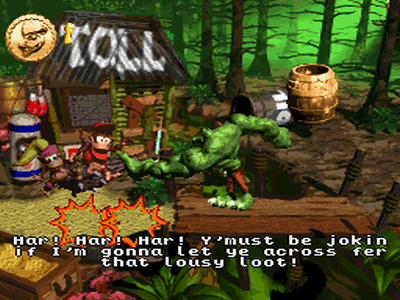
I think what Rare did with the DKC series is unparalleled. It definitely can be mimicked, but with how trophies and achievements work nowadays, it’s unlikely. There have been games that reward people for their collecting efforts, such as Halo 3 with its unlockable armor pieces and Mass Effect with its stat boosts for unlocking certain achievements. Though mostly cosmetic, both these games at least hand you something worthwhile for completing a milestone, and that’s commendable. I just wish more developers would look to the system set in place by the Rare of yore.
Once again, collectibles are responsible for running a substantial amount of the gaming addiction. Practically every game sports some type of collectible, but none can come close to the unrelenting perfection set in place by the DKC series. There’s no reason why games can’t augment what DKC has done, but if one thing’s for sure it’s that the gaming industry would be a much better place if they did.
Labels: Andrew Whipple III, Assassin's Creed, collectibles, Donkey Kong Country, Donkey Kong Country 2: Diddy's Kong Quest, Feature, Gears of War, Grand Theft Auto IV, Rare
- Andrew Whipple III
Subscribe to our content
and never miss a single thing

 subscribe to our monthly newsletter:
Our most recent writing

Our most recent reviews
Recent comments
All comments are subject to our commenting policy
Latest videos

Subscribe on YouTube

GGTL Classics
Some of the very best articles dug out from deep in the GGTL archives, written by some of our past and present wordsmiths alike.
Your continued use of this website and/or any others owned by Gamer's Guide to Life.com represents your acceptance and indicates your full understanding of all of our legal policies and terms. Our legal policies and terms are legally binding. If you in any way disagree with or refuse to be bound by any part of said legal policies and terms, you are advised to leave this website immediately.