 Follow us on Twitter: @ggtl
 Join our friendly community!


Latest news

 3.5.11

Aristotle. 384 – 322 BC. A Greek philosopher, a student of Plato and teacher of Alexander the Great. He came up with some wicked clever ideas, especially that considering Plato, his teacher, came out with some right old rubbish. Aristotle made very astute observations about what makes something something, and why things are what they are; their purpose. Aristotle was a pretty cool dude. Except that his wonderfully inventive ideas on the primum movens aren't his best work. Not even close. No; Aristotle has something much bigger to add to his CV. Something much more important.
Aristotle is the best games reviewer the world has ever seen.
Do you remember when, messing around with LEGO, you decided that you were going to make something really, really awesome? So you sat down, and thought for a while, and then went to work on the best temple/castle/spaceship the world had ever laid eyes on? And once it was done, despite the fact that all there was in front of you were little multicoloured blocks put one on top of the other, there was something stunningly brilliant about it? Something hard to describe, but a feeling of accomplishment, and pride, that made the structure more than just a collection of tiny, plastic Danish blocks; it made it unique and special. How about when listening to this tune, regardless of it just being a series of musical instruments playing in a certain sequence? Does it give you that beautifully nostalgic feeling that adds so much more to the experience of listening to a random song? That's 'holism'.
Holism is, according to the big man himself, when 'the whole is different, or more, from the sum of its parts'. So, you can look at the LEGO building as just various blocks placed in an aesthetically pleasing order, or music as a series of sounds, but holism would argue that the extra sense of accomplishment that accompanies it - all those nostalgic memories of The Sims - make the experience more than just what it's made out of.
Apply this to video games, and it explains why Aristotle would have made a killing in the reviewing industry. S.T.A.L.K.E.R., one of my not-so-secret passions, is a troublesome little thing. Despite three games in the series, it has used essentially the same game engine from 2006 onwards, and has been plagued by some serious issues; bugs galore, shoddy AI, weak bullets, and just a general feeling of outdatedness.
But there's something special to it.
When the superb lighting bounces around an abandoned Pripyat, bursting through broken windows. The bloodied hospital floors as a baby's cry echoes all around you. You know the glassy-eyed husk of a Duty fighter caught in an emission is somewhere ahead of you, but you don't know where. Low on ammo, low on health, low on confidence. Now, you could take a step back from the screen and simply note the shoddy textures, the repeating sound clips and the immersion-breaking HUD. That is, after all, what's in front of you. Those are the building blocks of the S.T.A.L.K.E.R. experience. But, somehow, they mould together to create the nerve-wrecking, sweaty-palmed horror-fest that gets your heart pumping and your teeth chattering every time.
Aristotle would have been the best games reviewer ever if he had been around in this internet age. So many reviews these days get bogged down in technical talk; over-analysing of anti-aliasing. They examine every texture, every bug, and every pixel. What they miss, though, is the real game: the action that's happening right in front of their eyes, the experience created by the fusion of all the game's elements. Of course, the technical side always has its place; Fallout is - justly - condemned as a buggy mess, but if you just reject it on its slip-ups and glitches, you'll miss one of the most enjoyably violent, immersive and open-ended games on the market.
Never judge a book by it's cover. Never eat yellow snow. Don't wee with the seat down - seriously, it'll only go wrong; men can't judge distances right - and never forget the overall, the conclusion, the overarching feeling of a game.
A game is more than just parsible entities.
Labels: 2011, Aristotle, Chris, Chris Hawke, Culture, Fallout, Feature, Industry, S.T.A.L.K.E.R., STALKER, The Sims
- Chris Hawke

I've always loved RPGs and open-world sandbox games. They're the ones that unleash gaming's true potential as a truly interactive experience, by placing you in a world which you directly alter with your own actions. As such a fan of the genre, I've spent a lot of time listening to podcasts, reading articles and watching interviews in which developers talk about building these types of atmospheric, non-linear games.
I've think I've found the rule for a successful open world game.
I don't think anyone can doubt that making a game with good atmosphere isn't one of (if not the) main goals for modern game designers. Any game that has a large area to explore has got to feel right; whether it's magical and fantastic or real and grounded, no matter the genre or take, all imagined worlds follow the same principles to feel alive and real. Fun, engaging gameplay is important, but if you're spending 300 hours in an unconvincing land, you won't have fun; a nagging voice in your head will always remind you that 'this isn't right'. Feeling immersed is a vital component for both basic enjoyment and that special emotional connection felt only in incredibly good games.
Graphics, obviously, often aid immersement. Most upcoming open world games look to have no lack of beauty - Skyrim is an obvious example. But it's the wealth of small, often minor features or mechanics that truly make or break a game world. Take S.T.A.L.K.E.R., for example. While its textures may be bland and outdated, its lighting is superb. When combined with other effects, like eerie scrathces and moans, it has a huge ambient effect. Why do players get so scared when, say, approaching a Bloodsucker lair? It's not just because of the streaks of intermittent lightning; it's the fact that, at night, you've wondered past the lair before, seen odd lights, and heard strange noises. You've noticed twisted corpses and blood painting walls, all of which give you a feeling of the area's history. A Bad history. You've heard rumours from NPCs about this place, so while you have an idea of what's coming, you're not truly sure what to expect. Graphic and sound aesthetics combine with narrative clues to create a place that feels frighteningly tangible.

After playing these types of open world RPGs and sandboxes for a long time, I think I've come up with my own little maxim that you can apply quite well to all those games that have truly outstanding atmosphere - the ones that truly feel real, truly engage with the player with a real, breathing world. Basically, after you've turned off the game, close your eyes and imagine the game world for a moment. Once you've envisioned it, ask yourself:
Is it possible for that world to function without a player?
Example: GTA. Take Vice City or San Andreas. Those worlds only functioned with the player inside them. If you imagined the game was still running after you stopped playing somehow, it would be utterly dead. Cars would still go round, but nothing else would happen. All its missions are simply waiting around for you start them. The cops wouldn't have to chase anyone down. The gang wars would never happen, as in the game it takes the player to press a button saying 'start a gang war'. NPCs would wonder aimlessly, without purpose. It just wouldn't feel real. The Vice City or San Andreas worlds do nothing but wait and react to one person: you.

GTA IV, on the other hand, pretty much nails it. Thanks to what you've seen or experienced in the game, you know random events can occur. So, if you imagined Niko Bellic went away for a while and Liberty City was left to it's own devices, it would actually make for a pretty convincing world. The police would still chase criminals, whizzing past you while chasing someone else as you've often witnessed, so when turning off you console you feel like 'Hey, there's stuff going on that isn't player-dependant'. NPCs would carry shopping bags home, dash between awnings in the rain, drive to work, and react to one another. Helicopter tours would fly around the city, day would turn to night, there'd be a shoot-out somewhere, the weather would change, and so on and so forth. It'd be a boring place, sure, but you still feel like things would happen, events would occur, and there'd be some purpose and order to the city without you roaming it. The game, on this occasion, isn't simply waiting for you to affect it; it's a realistic, alive place, that you just happen to have a very active role in.
This 'can-the-world-thrive-without-its-player' theory can be applied to many of these types of games. In S.T.A.L.K.E.R, Duty and Freedom patrols occasionally run into each other and have a fight in its shadowy environment. That made it feel alive, real, ever-changing, and so on. As progressed, you visited places with escalatingly worse atmospheres. As the environment became increasingly harsh and the situation more dire these sort of events happened less and less, until essentially it was only you doing the unique, world-changing things; the game was just waiting for you to accept a mission to go somewhere and do something. If you didn't play, nothing would happen.
Here's another one for you - Fable. Peter Molyneux did a good job with this. In the original, there were ships that deliver trade goods on certain days of the week, and villagers transporting those goods to individual shops. And then every night all the villagers would gather at the tavern and have a few drinks. Small details, yet it did wonders in making the game world feel vibrant and alive.

In half a year we'll be able to test this 'does-the-world-function-without-me' theory on the newest title in the Elder Scrolls series: Skyrim. I love Skyrim. I utterly adore Skyrim. And I actually have great faith in Bethesda, because despite engine limitations Fallout did a pretty good job of creating a believable environment. You'd find people fighting over a fridge, or someone crying with a bomb strapped to their chest - these made the place feel dynamic, like it would be a pretty interesting, eventful environment without you (though, of course, not as eventful as if you were there).
It'll be the small things that will make or break the world of Skyrim. Imagine, for instance, you go to a town and see Jimmy. You have a chat, and he tells you that he's going to start work soon, or that he really wants to be an adventurer. You go off and do missions and explore the world, but eventually you cross the same town again. Jimmy's there, with a lovely new piece of armour on. He tells you he did a bit of work for a friend, and earned enough to buy this really awesome breastplate. You, as a player, are thinking "Wow! While I was off doing my own things, Jimmy was actually off doing HIS own things, independent of me! It feels like this is a real place where people do new things and have experiences regardless of whether I'm here! I can't wait to see what else has changed!".
Or you'd probably just think "Wow, that's kind of neat. What's for lunch?".
Point is, the world with Jimmy feels alive, real, atmospheric, engaging, and full of wonder and change and dynamicnessosity (a word I just made up). There are loads of seemingly insignificant ways to add this Jimmy effect. A house has a broken roof, and after a while, you go back to see the house and it's fixed. A store clerk mentions getting new stock soon, and you come back later to see they've actually received it. You could even have mini-missions occurring that you don't take part in. You see a wife running down the street of the town, asking if anyone has seen her husband. You can't take it as a mission or do anything to alter the events, but you find her later, hugging her rescued husband. And you think:

"Hey... It is possible for this world to function without me"
Labels: 2011, Chris, Chris Hawke, Elder Scrolls, Fable, Grand Theft Auto, GTA, GTA4, S.T.A.L.K.E.R., Skyrim, STALKER
- Chris Hawke

It's that time of year again, when obligatory lists must be wheeled out and paraded in front of an audience, poked at with sticks and forced to do tricks for the laughing crowd, whilst salty tears streak down the list's face as it realises it could have been so much more, it could have done something with its life, and so forth. The Game Developer's Conference is always a happy time of year, and 2011 is very special due to Gamer's Guide to Life.com's list of games likely to be revealed. We've thunk real hard about these ones, to try and bring you the most realistically viable eight games that could see the light of day.
Assassin's Creed III

Well, this is a given. Ubisoft have confirmed that the final part of the trilogy will hit stores in 'fiscal 2011', but the developer also have Splinter Cell 6 in the wings, being developed by Jade Raymond and company. How do you balance two heavyweights like that? For our money, Desmond will swoop in late 2011, with Sam going back to basics in 2012. A good start to the decade for stealth, then.
Far Cry 3

It's been three years since games took to the plains of Africa and found nothing bit bitter disappointment. Don't let ridiculously high review scores fool you; Far Cry 2 was ham-fisted, broken and unfinished, despite the wonderful graphics. Antarctica has been suggested as a new setting, while others claim the series is staying in Africa (because you can't get enough of that sweet, sweet malaria), but expect a headline-grabbing feature to blind you with beauty - last time it was realistic flames, so maybe for the third outing it's... really awesome water?
S.T.A.L.K.E.R. 2

PC gamers, rejoice! Fans of the Soviet era, rejoice! People who like mutants, rejoice! Finally, after three whole spin-offs, the S.T.A.L.K.E.R. series is getting a proper sequel, and this time Dualshocks and Gamepads are invited to the party. GSC Game World announced the title last year, but all's been quiet on the Eastern Front. What are they hiding? Well, after seeing the graphical prowess of Metro 2033, worked on by various ex-GSC employees, expect Chernobyl to look lovely. Albeit in that post-apocalyptic way. Think terrifying mutants; think atmosphere and new locations like the monstrous 'Russian Woodpecker'. The announcement could get shouted down in the busy booths of E3, so GDC is the perfect time to unleash the first gameplay.
Brothers in Arms: Savage Seven

Ousted by GAME last year, it's about time the ace Hell's Highway got a follow up. For those who want their killing a little more refined, Brothers in Arms not only has gameplay that's half-FPS and half-puzzle, but a superb story reminiscent of Band of Brothers. The 'Savage Seven' has prompted a lot of speculation, but the seven roads coming together in Bastogne is the best guess so far. It was also hinted in Hell's Highway (by a ghost, no less) that the series is headed for a snowy setting. Just so long as we're popping Nazis, then we're happy.
a Rainbow Six reboot

The Rainbow Six series burned brightly and then fizzled out in Vegas (twice), with its raffish charm the only thing working in its favour. Expect a Medal of Honor-style reboot, complete with gritty realism involving shady terrorists and a greater focus on online co-op, all in a near-future dystopia of corruption and crime. Ubisoft have a strong line-up anyway, so it might be shelved for E3 or even Spike, but no doubt they're itching to get the hype-train rolling. Down a hill. Full of hostages you must rescue.
Burnout 8

Criterion have been oddly quiet for a studio the makes games about really loud cars, so they must have something up their sleeves. With Shift 2: Unleashed gearing up for release, and Gran Turismo 5 an almost distant memory, it's the perfect time for Burnout to reclaim its crown and sit on the throne of racers that have it all: looks, speed and destructive power. Don't expect a gritty reboot - just lightning fast vehicles, beautiful visuals and the ability to T-bone anything stupid enough to get in your way.
Resident Evil 6

After that quick trip to Africa produced mixed results (bit of a theme, no?), Resisdent Evil needs to go back to basics; namely, shooting the faces off badass zombies. Go back to the dead of night, stop being so racist, and just let me shoot things that bleed! A European, urban setting seems right on the books, and Capcom have a thing for bringing back old characters, especially if they're emo (oh, hey, Leon), and with the Wii versions turning out to be a success, expect Move and Kinect compatibility.
The Chronicles Of Riddick 3

Have you noticed how stealth is pretty much dead? Some games ask you to stay in the shadows, but it's only until you burst out and gun everyone down. Riddick not only provided valuable work for Vin Diesel (the man has a family to feed), but was also incredibly empowering: stalking an unlucky soul in the hallowed corridors of Butchers Bay or Dark Athena before jumping out, slicing his throat and retreating back into darkness was uniquely moreish, and despite the lack of a film to go with, gamers would snap it up regardless.
GDC 11 starts tomorrow, so get ready for reveals galore. Follow our Twitter for more delicious content from our Michelin-star writers.
Labels: 2011, Assassin's Creed, Assassin's Creed III, Brothers in Arms, Burnout, Chris, Chris Hawke, Far Cry 3, GDC, GDC 2011, Rainbow Six, Resident Evil, STALKER, The Chronicles of Riddick
- Chris Hawke

Game Information
Basic information
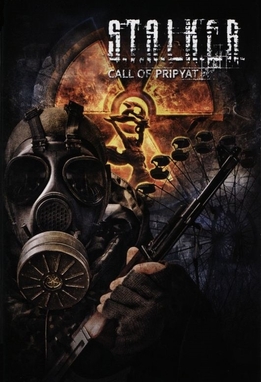
S.T.A.L.K.E.R.: Call of Pripyat
Developer: GSC Game World
Publisher: GSC World Publishing
Released: February 2010
Platforms
PC (Microsoft Windows)
Genres
First-person shooter
Role Playing Game
Survival Horror
Certification
PEGI: 16+
ESRB: M
It's 2:14 in the morning. I am not alone. A hunter, Grouse, needs help in tracking down a bloodsucker who killed his friend. It's raining outside. The occasional flash of lightning rushes through the windows of the abandoned substation we're in. I can hear my heart pumping blood around my ears. I raise my shotgun. For just the slightest second, two bright dots shine at the other end of the room. Then they're gone. I realize my palm are sweating, my left hand is quivering, I can hear the surreal heartbeat grow and grow. We stop. A faint branch snap comes from outside. By the time I've turned back round to view the room, it's too late; the screen goes red. I actually have to calm my physical self as I wait for my last save to load.Basic information
S.T.A.L.K.E.R.: Call of Pripyat
Developer: GSC Game World
Publisher: GSC World Publishing
Released: February 2010
Platforms
PC (Microsoft Windows)
Genres
First-person shooter
Role Playing Game
Survival Horror
Certification
PEGI: 16+
ESRB: M
S.T.A.L.K.E.R.: Call Of Pripyat can be utterly incredible.
Call Of Pripyat is the third game in the S.T.A.L.K.E.R franchise; more of a Shadow Of Chernobyl (the first game) expansion than a full standalone title. The story is that, after you paved way into the center of the Zone in the aforementioned original, the Ukrainian government sent several military squads to try and seize the area. All the helicopters crashed. As an ex-STALKER (the collective terms for social outcasts and bandits who scrape a living in the Zone, the radioactive area around the Chernobyl Power Plant), you're sent in to find out the troops fate. At this stage, the story is disappointingly weak; while the military operation is played up to be a full-scale, massive invasion, it's really only 5 helicopters; unlike Shadow Of Chernobyl's post-Brain Scorcher act, where there was a real sense of your character and the recent events making a massive change to the world; where every single in-game NPC was involved and talking about it. Many STALKERs in Call Of Pripyat didn't even know the military tried to invade. You're told early on that you've been given a radio with which you can communicate with HQ - at no point in the game do the USS ever contact you through it. You might as well be a curious STALKER. When you're first thrown into the Zone, it seems like quite a shallow, quick-fix plotline to get the action rolling, rather than a sprawling epic of the first game, utilising the eerie powers of the Exclusion Zone.
So, after a brief 'cut-scene' introducing you, and informing you of what's been going on, you're suddenly let loose on the world. That's it. No tutorial, no hand-holding, no help whatsoever. Just a few objectives and a little hint of 'go to the nearest settlement'. This is easily the worst part of Call Of Pripyat - the first two hours or so. Totally lost, you'll stumble about getting torn apart by mutants, running into radiation and generally having no clue what to do.
But, please, I beg of you; stay with the game. Don't switch off. It may take a while, but after you've found a place to settle down and organized your objectives, the game starts to make more sense. To begin with, you're given five objectives to find the five helicopters. You can pick up side missions, but at this point, it still feels a little empty and cheap - no story-driven, twist and turns of the previous games, just a checklist.
What is good, however, is the much-improved side-quest system. Instead of the ever-repeating 'Get me 5 of X' quests, Call Of Pripyat has over 70 unique, clever and generally very interesting missions that can be picked up along the way. Your PDA usually tells you what to do, but sometimes objectives can be frustratingly vague - "Get tools for Nitro". Where? Where from, game? Tell me! Often, you're left on your own without a map marker to guide you, meaning you'll lose interest in the mission pretty quickly, or have to seek help from an online walkthrough. You dirty cheater.
What hasn't changed is the gameplay. Alright, there have been a few tweaks - new enemies, new weapons, some new anomalies; but the artifact hunting, weapon modifying and - y'know - shooting, remain the same. Which is a very good thing. It might not be most accomplished set of mechanics around, but the general feel of sniping a mutant, whipping out your detector and grabbing some artifacts remains brilliantly engrossing.
Of course, S.T.A.L.K.E.R. wouldn't be S.T.A.L.K.E.R. without Chernobyl, and the Zone. Call Of Pripyat uses an updated version of the X-Ray Engine, first used way back in '07. As a result, despite wonderful and improved effects such a the beautiful lighting and realistic water-textures, the game simply looks old. Outdated. Past it's time. It does well enough to hold the game together, but at some points (like the terrible grass draw-distance) you can see the duct-tape and glue desperately keeping all the cogs in place. Still, it gives a familiar feeling to fans of the series, who'll instantly seem at home.
So far, so average. But then, after the first map - which is little more than a checklist of objectives and a place to get accustomed to the game - when you move into the Jupiter section, things change. For the better. Suddenly, from nowhere, the story kicks in. It goes from repetitive, background noise to properly engrossing, didn't-see-that-coming twists and turns. While the very, very last mission is slightly clumsy, the transition from Jupiter (the second map) to the cold, dead city of Pripyat (the third map) is utterly brilliant - you'll have to make some end-changing choices, delve deep into the dark abyss of an underground laboratory and be dragged along in some pretty thrilling firefights. Everything starts to make sense, and even better, get interesting.
And it's with this new-found confidence that S.T.A.L.K.E.R.: Call Of Pripyat earns the 9/10. These fresh and engrossing objectives produce some of the best moments in gaming; right up there with the Bioshocks and Metal Gear Solids. No, honestly. At one point, in an underground lab, with nothing but a rusty shotgun and faint flashlight to help you, you suddenly hear the piercing screams of a baby crying. A chill runs down your spine, your chest tightens, your palms sweat. You forget where you are, what you're doing; you cower in a corner, hoping for the lights to suddenly kick in and flood the room. The characters are no bullet sponges, meaning only a handful of shots can take an man down, which leads to some incredibly tense peek-and-lean shootouts that have you on edge as to stave off bandits left, right and center.
The best example of mine comes late on, in Pripyat, tasked with restarting the generator in an abandoned hospital (you already know this is going to go wrong). Happy to take up such a seemingly easy task, I scamper off into the city. Just as I stop running, outside the grand doors of the building, I realise - night has crept up on me. It's pitch dark and I didn't even notice, swept up in the hauntingly beautiful architecture. Then the rain starts falling. Then the lightning flashes. To make matters worse, there are over 20 zombies (not the Call of Duty: World at War type - these are bandits and stalkers who've had their brains mushed by an emission) wandering the hospital floors. I didn't dare turn my light on, in case it attracted them. That feeling - with the sound of rain patting the leaves outside, and intermittent beams of light streaming through the windows as the moans of zombies carry you onwards into the dark - that feeling is something that no other game can match.
It doesn't stop there. Every single player has dozens of unique, haunting tales of their adventures through the Zone, whether this be seeking shelter from a deadly radioactive emission in a mutant infested underpass or swinging your torch round in an abandoned kindergarten in search of bloodsuckers, only to be scared to death by a massive mural of a creepy cartoon-ish lion (a true, paralytically frighting story). There's even a brilliant, Call Of Duty-inspired sniping mission, that, in many respects, feels better and more realistic than the famed outing in the '07 classic.
Newcomers to the series might feel a bit out of place, and you'll just have to grind your way through the first few hours of Call Of Pripyat. But once you do, you're rewarded with one of the most atmospheric and bone-chilling games in recent memory. The engine might be old and creaking, there's that unavoidable sense of deja vu, but if you just give it some time, S.T.A.L.K.E.R.: Call Of Pripyat easily becomes one of the best, most unforgettable games this generation.
9/10
Chris
Labels: Chris, Chris Hawke, PC, Review, STALKER
- Chris Hawke
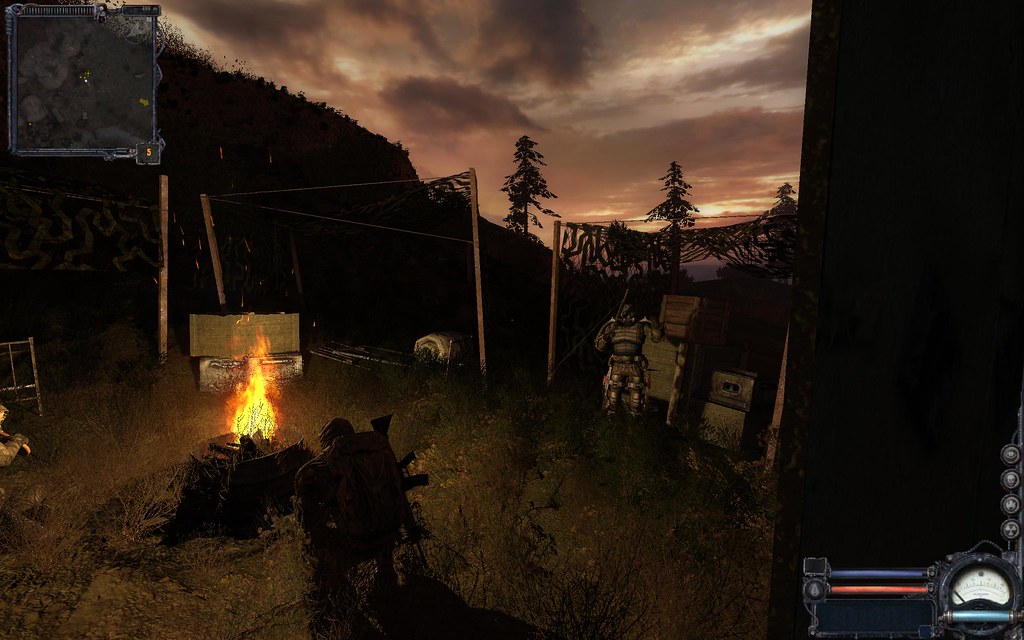
Now, artistpavel is working his magic on S.T.A.L.K.E.R: Clear Sky with 'S.T.A.L.K.E.R: Clear Sky Complete'. It's basically the same thing, but on a different game. Like to know more? We'll, stay tuned - in the coming weeks we'll be interviewing Mr. Pavel on his 'Complete 2009' mod and his future releases.
You can check out the mod, with screenshots, here.
Chris
Labels: Chris, Chris Hawke, Modding, News, STALKER
- Chris Hawke
via source
Subscribe to our content
and never miss a single thing

 subscribe to our monthly newsletter:
Our most recent writing

Our most recent reviews
Recent comments
All comments are subject to our commenting policy
Latest videos

Subscribe on YouTube

GGTL Classics
Some of the very best articles dug out from deep in the GGTL archives, written by some of our past and present wordsmiths alike.
Your continued use of this website and/or any others owned by Gamer's Guide to Life.com represents your acceptance and indicates your full understanding of all of our legal policies and terms. Our legal policies and terms are legally binding. If you in any way disagree with or refuse to be bound by any part of said legal policies and terms, you are advised to leave this website immediately.