 Follow us on Twitter: @ggtl
 Join our friendly community!


Latest news

 25.4.11


Today, as I walked the fifty meters between my small Denver apartment and the treadmill and dumbbell'd corner dungeon under the leasing office that it calls a gymnasium, I noticed how peaceful the scenery was. For those of you who've never been to the Rocky Mountains during late spring or summer, the effect of warmer weather on our alpine climate creates a mix of sunny mornings, cool air, calm breezes and occasional five o'clock thunderstorms which ebb at dusk, merging with the morning tranquility to create a mountain horizon painted by some of the most serene and colorful twilight skies on this planet; the type of environment aspiring poets make pilgrimages to in search of their muse. It was while walking through this meteorological paradise, breathing in the serenity of nature, that I found myself wishing I spent as much time outdoors, being active.
I wished - God help me - that I spent more time playing sports.
Gaming has been at odds with athleticism since its earliest days, when nerds exchanged their allowances for quarters and hung out at the arcade while jocks spent their money on booze and talked to girls under the bleachers after practice. For whatever reason, the two have never completely reconciled - every high school in America has a series of gamer tables (Magic the Gathering players, over-caffeinated programmers who own their own Minecraft servers, etc.) and jock tables (separated by sport and Alpha male) that remain on opposite ends of the cafeteria. There's a definite schism that goes on in grammar school when children begin focusing their time on either athletic or game-related activities, and that's a shame.
The stereotype of a meatheaded jock who can't pass basic Algebra, let alone make it through fifteen minutes of Myst, is just as unfairly broad as that of the asthmatic gamer who instinctively raises his overly skinny/flabby arms when going outside in order to protect himself from the harmful barrage of UV rays pelting his papier-mâché exoskeleton from the sun. Just as athletes are more than capable of becoming passionate, talented gamers, so too are gamers able to thrive in the wide world of sports.
I'm willing to take that statement one step further. By tapping into their complex critical thinking, keen analytical, and confident hair-trigger decision making skills, gamers could be some of the most amazing, talented athletes ever to put on goggles, cleats, or hockey pads in a locker room. With only a slight change in lifestyle, chronic gamers who dedicate themselves to a specific sport could easily become gods of their respective arena, rising to the immortal level of a Lionel Messi, Payton Manning, or Michael Phelps.
It's not even a stretch.
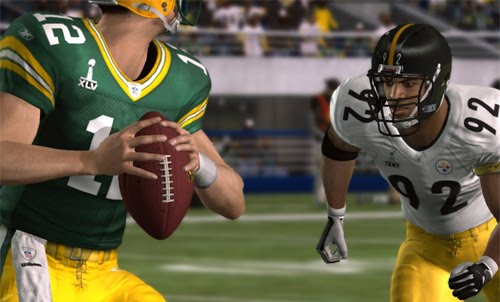
Let's address why. First of all, gamers are notorious for their ability to put up with a hellishly arduous grind in order to achieve a specific goal. World of Warcraft and other MMORPG players are famous for this - they'll lay the sacrifice of their retinas upon the altar of their computer screen for hours, days, and months just to obtain that new chestpiece all of Azeroth has been lusting over. Even an impressive-looking fishing pole provides enough motivation for millions of gamers to spend millions of hours setting the mood for the proud and lusty walrus. It's already been established that gamers can call on this hardened determination in order to enhance their studies. Why not use it in a gym or on a field?
Secondly, athletics are exponentially more cerebral than most non-athletes give them credit for. It takes real intelligence to know where your body is and how best to alter it in a way that fools or surpasses your opponents. In martial arts, a fighter has to assess the skills of whoever they are fighting and develop a strategy as to how best to implement their own abiities (reach, stamina, power, et cetera) to exploit any weaknesses. It's the same process as any multiplayer game that pits human minds against other human minds. In an online first person shooter, a gamer has to find and assess the talents of his or her opponents, then strike at their Achilles heel repeatedly until they are bested. Discover. Assess. Exploit. Whether it's Mario Kart or Scandinavian Whale Wrestling, this formula applies.
If it helps, think of athletics as its own console that encompasses any setting requiring repetitive physical movement far away from a screen, be it an outdoor field, lake, pool, ice rink, mountain slope, beach, or open-ceilinged Japanese dojo littered with falling plum blossoms hailing from parent trees lingering overhead. In lieu of a controller, one's body itself becomes the conduit through which decisions from the brain are manifested into being. That's the main, perhaps only, difference separating video games and athletics - both involving confidently implementing coherent decisions in a fraction of a second via a specific conduit, be it by pressing a button o a controller or reaching one's arm out to divert an oncoming kick.
Like in games, success at athletics offers an impressive reward system: Respect from fans and peers. A feeling of accomplishment. Lifelong friends. A goal-oriented work ethic. Confidence in oneself. A compassionate winning personality. The ability to eat seven wedding cakes whole and not gain a pound. There are more than just douchey letterman jackets and tales of glory to be had. Sometimes athletic rewards can be as concrete as that shiny new World of Warcraft chestpiece, manifesting themselves in the form of gear, trophies, even multimillion dollar advertising deals and all the Wranglers you can eat.

The Ancient Romans and Greeks believed strongly in the concept of mens sana in corpore sano, "a sound mind in a sound body." To them, a person who had only one or the other was limiting their potential as a human being. To achieve true arete, roughly translated as excellence of any kind, one had no choice but to be a huge brain in a ripped-up body. It may sound douchey, or even impossible, but more than anything it's healthy. The gaming community is beginning to learn and promote, albeit slowly, the need for balance and health mens sana in corpore sano with titles like Dance Central or Wii Fit, both of which force players to get off the couch and move.
Given their near-instantaneously problem solving and decision making skills, veteran gamers have more than enough mental capability to excel at athletics. As time goes on and technologies like Playstation Move, the Wii Fit pad, and Kinect tempt gamers to replace their stretchy pants for $300 bike shorts, the antiquated stereotype of unhealthy gamers who abhor athleticism - who live on a diet of Mountain Dew and sadness - may follow the Dodo. Technological advancement blurs the line between jock and nerd a little more each day, and that's a terrific thing. After all, whether they're attempting to solve a puzzle using a gun that creates portals on their PC or striving to kick a ball through a net on a grassy field, both jocks and nerds are doing the same thing:
They're playing games.
Labels: 2011, Athletics, Greg Mengel, Kinect, PlayStation Eye, PlayStation Move, Wii Fit
- Greg Mengel

Sony has a lot to prove with the PlayStation Move. They've got to show that it isn't just a Wii in high definition, and that it can compete with the admittedly impressive camera technology behind Microsoft's upcoming Kinect. But, most importantly, there have to be some games worth playing. The Wii has 50 shovelware titles for every gem released by Nintendo, whilst Kinect's launch line-up has nothing for the hardcore gamer.
Start The Party, previously known as Move Party, is a collection of augmented reality mini-games in the same niche as the old Eyetoy games. It does well in showing off the impressive augmented reality that the Move and PlayStation Eye camera are capable of, but as a game is it worth buying?
The first thing that'll strike you about Start The Party is its colourful and clean presentation. This is not a bad looking party game: it's bright and vibrant, the backgrounds are detailed and it's clear that some effort has been put into how the game looks. Alright, it hasn't really got a distinct personality behind its appearance, but this is still quite a pretty game. What's most impressive about the way the game looks is the augmented reality it uses to put you inside the game and turn the Move controller into a variety of different items depending on the game you're playing. The PlayStation Eye is able to not only display you on screen within the game, but can also track the Move controller and replace the glowing ball on the top with another object, creating the effect of augmented reality. The game also takes a photo of you for your scoreboard avatar, and you can record your name so that the game can call you when it's your turn, which are both nice touches. It's very impressive, but unfortunately all it really makes you think is how cool it would be in a game that was actually decent.
It's not often I talk about the presentation of a game first, but I thought I'd get the positives out of the way because, quite frankly, this is a rather poor attempt at a mini-game collection. For a start there are only 20 games to play, which - compared to the eighty-or-more in Nintendo's Wii Party - is a very poor effort. It means that the game becomes old incredibly quickly, and a family can get a taste of every game within a weekend, whilst none of the games manage to maintain their appeal for more than a week or so. It isn't helped by the fact that Startg the Party is terrible at rotating the mini-games, meaning that you play the same ones far too frequently. For some strange reason, when using the Party Mix option (which allows you to choose which games you want to play) you're only given a selection of around six of the games instead of the whole set. It's a baffling design choice.
The games themselves are a mixed bag: some are reasonably fun, but others are frustratingly bad. Squatting bugs with a tennis racquet and painting shapes are handled well, whereas directing a rescue helicopter and creating wind to guide falling parachuters make very bad use of the Move controller and as a result are more annoying than anything.
Obviously this is billed as a casual game for the whole family, but it still commits the cardinal sin of not rewarding player skill. Like Mario Kart Wii (in which, no matter how good at racing you are, one blue shell could be the end of you), Start The Party gives the worst player in the game the opportunity to gain a decent amount of points before the deciding round by doing the simplest of tasks. It means that rather than the best player going into the final round thinking they've deservedly won, they go into it on the back-foot. It might not annoy some people, but those of us with a competitive streak will be launching their Move controllers at either the television or other players in anger.
It's also worth noting the mind numbing audio. The music is repetitive and the sound effects are cheap and loud. The announcer is also a right cheeky bastard, and after a few games you'll really want to slap him (along with whoever thought it was a good idea to purposefully not include the option to mute him).
Start The Party seemingly had two aims: to create a compelling and fun mini-game collection, whilst also showing off the capabilities of the Move and Eye camera. Unfortunately, the actual game section is executed badly. If you want to show off the Move to your friends then this might make a decent weekend rental, but there is no way you should be paying £30 for a mess such as this. Start the Party is one party you'll wish would just end.
2/10 [?]
Labels: Party, PlayStation Eye, PlayStation Move, PS3, Review, Start The Party, Tom Acres
- Unknown
 Some of the features offered by Microsoft's Project Natal, which caused such a raucous at E3 2009, are already in the PlayStation Eye - a statement dropped by Sony at this years Develop Conference.
According to Sony, their R&D department has already developed facial recognition software for the PlayStation Eye, which can see the position and direction of a player's head and can work out the gender and age of the face, and detects different parts of the face including nose, mouth, eyes, eyebrows, shape of the mouth - and even glasses.
While Sony may not have realised the sort of public interest such software can cause until after E3 2009, they're keen to show that they're not out of the running just yet.
However, Microsoft is hard at work developing Natal's software, and admits that Natal may be used in offices on PC's in the future, and that it certainly isn't the only new hardware in the 360's future.
“We effectively reinvented the Xbox once already when we rewrote the dashboard,” Spencer says, “It’s not about trying to sell consumers a new piece of hardware at the wrong time, it’s about evolving the platform continuously. And we are going to find things, like Natal, that are hardware related to also do that," says Phil Spencer of Microsoft Game Studios in an interview with industry analytics MCV.
We instead want consumers and developers to know that we are all going to make a huge return on that original investment in the hardware… In the current climate that’s something people are going to appreciate much more.”
Whether or not Sony's advancements on the PlayStation Eye are enough to steer potential Natal users away from the Microsoft service is yet to see, but don't expect either of the technologies to be on the market until at least late 2010.
Linford
Labels: 360, Linford Butler, Microsoft, Natal, PlayStation Eye, PS3
- Linford Butler
Subscribe to our content
and never miss a single thing

 subscribe to our monthly newsletter:
Our most recent writing

Our most recent reviews
Recent comments
All comments are subject to our commenting policy
Latest videos

Subscribe on YouTube

GGTL Classics
Some of the very best articles dug out from deep in the GGTL archives, written by some of our past and present wordsmiths alike.
Your continued use of this website and/or any others owned by Gamer's Guide to Life.com represents your acceptance and indicates your full understanding of all of our legal policies and terms. Our legal policies and terms are legally binding. If you in any way disagree with or refuse to be bound by any part of said legal policies and terms, you are advised to leave this website immediately.