 Follow us on Twitter: @ggtl
 Join our friendly community!


Latest news

 24.6.11

Since 2005, Traveller's Tales' LEGO-themes games have tackled various high-profile film and book series, and have captured the hearts of both casual, young gamers and the gaming-obsessed alike. Can their latest installment stand up to that reputation, though? Tom Acres wonders that question. Reviewed on PlayStation 3.
Since its inception in 2005, with the original LEGO Star Wars game, Traveller's Tales' family-friendly, LEGO-themed action games have gone from strength to strength. Rather than fall into the all-too-predictable trap of resting on one's laurels and simply churning out the same game with the same flaws and no improvements, each subsequent LEGO game has offered far more than simply a new skin to entice gamers back. The UK-based studio have been averaging a game a year thus far, but many feel they may finally be pushing their luck. After the March release of a fourth game based on the Star Wars franchise, Traveller's Tales shipped a new game just two months later: LEGO Pirates of the Caribbean.
Thankfully, there are just enough innovations and advancements made in this latest installment to draw you back in, except if you're perhaps one of those suffering from serious LEGO fatigue.
LEGO Pirates of the Caribbean is structured in just the same way as any LEGO game before it: a hub allows you to run about and unlock characters or just explore, as well as providing access to all the available levels. In the case of Pirates, there are twenty levels spanning all four of the films: Curse of the Black Pearl, Dead Man's Chest, At World's End and On Stranger Tides. Whilst it could easily be argued that the films get progressively worse, the crazier and grander set-pieces from the latter films do make for some enjoyable gaming situations. Duelling atop a giant rolling cage in Dead Man's Chest is commendably well done, as is the Maelstrom set piece from At World's End, and some large scale battles from the latest adventure that I won't spoil here. Of course, all these grandiose moments are interconnected by the same old platforming, puzzle-solving and simple combat that the series has become known for. Nothing is drastically different, but it's difficult to envisage exactly how the structure of these games would be changed. All the elements come together nicely, and fans wouldn't have it any other way.

The twenty levels on offer will probably be enough for around ten hours of enjoyment on your first playthrough, but one of the big draws of the LEGO series has always been replaying levels with different characters to collect studs, unlock new bonuses and - of course - scurry after those delicious Xbox 360 achievements and PlayStation 3 trophies. The formula of playing through the levels, collecting studs, buying characters, unlocking cheat codes and then replaying levels again still works. Smashing everything in sight to hoard more of the game's currency has a strangely addictive quality to it, as all the prior games also have. Everything that has made these games enjoyable, and stopped them from becoming stale despite their recycled mechanics, are here. There aren't many surprises to be had in that sense.
Recycled structures and predictable design might become a problem if the gameplay wasn't being continuously improved and refined. Whilst the mix of platforming, puzzles and combat is still here, each aspect has been markedly improved in each game, and the same holds true here. Platforming still feels a little loose, but the way the levels are designed means that the consequences of this aren't felt quite so dramatically as in prior games. Platforms are easier to jump to, swinging on poles is a breeze, and climbing and shimmying along ledges is also handled well.
The puzzles are probably some of the best in the series so far; there's a fair amount of standing on buttons and pulling levers, as you'd expect, but there are also some more creative sections on offer, such as rearranging and directing mirrors to direct beams of sunlight. Any potential frustration caused by these puzzles has been removed with the addition of handy hints and prompts to give you an idea of what you ought to be focussing on and where exactly you need to be. Plenty of 'what do I do now?' moments have plagued the LEGO videogame franchise for a number of years now, so it's nice to see Traveller's Tales take steps towards addressing that issue. Experience breeds quality, and that's certainly the case here.

What surprised me the most about the refinements to the overall gameplay was the combat, which is now genuinely quite thrilling. Sword duelling is fun to execute, with blocks now a possibility, and the fights seem far better choreographed than in prior games, in which random pushing of the attack button without any real brain power was the one and only route to success. Other items can also be incorporated into the mêlée combat, with sidearms like spades and rum bottles being used to turn the tide of a battle in your favour. As with all the past LEGO games, different characters make use of different weapons, so whilst many of the characters will be taking on the enemy with swords, there's also a fair opportunity to wield firearms and bombs to take down foes.
As always, there is a ridiculous number of characters to unlock, and the rich lore and wide variety of the wacky individuals from the film series lends itself very well to the LEGO treatment. The films themselves are already pretty ridiculous by their nature, so Jack Sparrow and his motley crew fit right into the ridiculous cinematic style that Traveller's Tales have polished to near-perfection since 2005. As ever, there is a tonne of lovely little touches spread throughout the game, like LEGO Sparrow's fantastic walk animation, and the way the cursed crew of the Black Pearl seamlessly turn into skeletons when they step into moonlight. The game does a great job of recreating the feel of the movies, all whilst providing plenty of laughs along the way, thanks to the brilliant pantomime style that the series is famous for.
The LEGO games have always been better enjoyed with a friend, and whilst that still holds true with LEGO Pirates, this is one area where Traveller's Tales' attempts to improve the system haven't quite hit the mark. The dynamic split-screen element that was introduced in last year's LEGO Harry Potter: Years 1-4 is still here, and whilst it looks great on paper, in practice it can cause some frustrations. When you and your buddy are a fair distance apart and trying to accomplish different sections of a level, it works fantastically well, but when you're still relatively close together and trying to attempt a tricky platforming section, it can all go pear-shaped rather quickly. For me, the split-screen simply comes into effect far too quickly, resulting in situations where the screen splits even when two players are still quite close together. The way this occurs is quite jarring and more than a little off-putting. It's commendable to see the developers try to improve the system - and, as I said, it seems like a great idea in theory - so we'll see how the system can be improved further in future titles.

One aspect that I'm not sure can be improved much more are the visuals. I promise you that I don't exaggerate when I say that this is a simply stunning game. It's always been great to see LEGO Jedi or wizards running around, and the look-and-feel of the movies is captured just as well in LEGO Pirates as it was in LEGO Star Wars, LEGO Harry Potter and every other LEGO-franchise game before. But even on a technical level, this new title is fantastic to look at. Graphical elements like high-contrast lighting, reflections, motion blur and depth of field are all used to fantastic effect. Animation on the characters is superb, the LEGO bricks are terrifically modelled and the realistic environments not only do a great job of contrasting with the LEGO theme, but also look beautiful in their own right. This is not just a great-looking game by LEGO standards: this is a great looking game by any standards.
As you'd expect, the visual presentation is supplemented by an excellent audio presentation. Hans Zimmer's terrific musical score is present and accounted for, with plenty of other sound effects ripped straight from the films. Grumbles and other audio exclamations from the characters are fantastically well done, working brilliantly in conjunction with the animations to help deliver the hilarious cutscenes.
Like I said at the start, it could be easy for Traveller's Tales to rest on their laurels: these games are guaranteed to make money and there's little motivation for Traveller's Tales to really make effort to improve them each time, but the way in which LEGO Pirates of the Caribbean is so much better than March's LEGO Star Wars III shows just how much work goes into each of these games. From the visuals right down to the level design, every aspect of these games improve with each subsequent entry in the series, and that trend isn't likely to end with LEGO Pirates of the Caribbean. It may well be a kids' game at its core, and there's still room for improvement in terms of gameplay and variety of tasks, but it's a damn good kids' game. And it's still one that any gamer who has ever enjoyed the LEGO series will be able to play through, with a huge grin on their face.
8/10 [?]
Labels: 2011, 360, Disney Interactive Entertainment, Lego, LEGO Pirates of the Caribbean, PS3, Review, Tom Acres, Traveller's Tales
- Unknown

Having just blazed my way through Lego Harry Potter: Years 1-4 and replayed LEGO Star Wars: The Complete Saga, my mind is awash with tiny Danish blocks. So far, Traveller’s Tales have parodied/extolled/reveled in the worlds of Star Wars, Indiana Jones, Batman, Rock Band and Harry Potter, forging recreations that simultaneously mock and tip their hats respectfully to their franchise parents by putting them in brick form. I, for one, want more.
Here are fourteen franchises that are already Lego-worthy in my mind. Try imagining yourself playing them in a happy utopian world, where the government provides every family with a unicorn pegasus, where robots work in the place of humans at 9-to-5 blue-collar jobs, and where the water is lined with just a hint of LSD. In this fantastic scenario, Lego has the rights to all creative property - ever - and has handed it off with a smile to Traveller’s Tales with the orders that they must create whatever franchise games they wish, no copyright infringement holds barred. Also, it’s Christmas everyday, and everybody races sled dogs to school or work.
Warning: anyone who says anything about “missing Twilight” in the comments will be slapped with the firm, open-palmed parental justice of a site ban*. That’s GGTL-style judge-and-jury shit, yo.
Begin.
14: Godzilla

To be honest, I’ve seen maybe two Godzilla films that didn’t star Matthew Broderick. I say "maybe" because the plots of every classic Godzilla vs Space/Radioactive Monster That For-God-Knows-What-Reason Seems To Seriously Hate Japan tend to run together. Flipping through channels on sad, rainy days I may have seen twenty different Godzilla films, but I can’t tell the difference. It walks, it screams, it demolishes the Japanese military or protects them against a giant Moth-shaped behemoth. Godzilla has a pattern.
That being said, the idea of giant Lego monsters demolishing a string of 1950s Japanese cities is an extremely fun, and unique, prospect. So fun and unique that I would spend hard earned greenbacks to experience it.
13: The Matrix

Besides the image of Lego figures breaking slowly and laboriously apart in bullet-time, there are a handful of reasons why the Matrix saga would convert perfectly into digital Danish toy bricks. First off, it has the necessary holy quadrinity of Lego title needs: characters, story, overall aesthetic and cult fan-base. Secondly, while I can’t bring myself to watch the second or third Matrix movies without a constant and copious flow of morphine, I would play through them in a game while clean and sober. Scenes that are originally graphic and ... orgyriffic ... can with the power of good old Lego magic become ridiculous and funny.
12: A purely LEGO created saga
Remember those basic sets you played with, back before Lego shook hands with the begrimed, devilish claw of the corporate man? Remember the glow-in-the-dark ghost piece? Remember the castle it took weeks to make with your dad?
I want a game of that.
This is tougher than it sounds. First of all, to do this Traveller’s Tales would have to pray that its original audiences - fans of Star Wars, Batman, Harry Potter, yada yada yada - had become fans of Lego games in general, and would buy a non-franchise-themed product. Second, it would have to tell a new story without using any words or text, as is the Lego game custom. Third, it would need to fuse seemingly unconnected classic Lego sets together with an at least somewhat stout plot. The culmination could be awesome, amazing, and damned terrific.
Maybe a single player version of this.
11: The Wizard of Oz
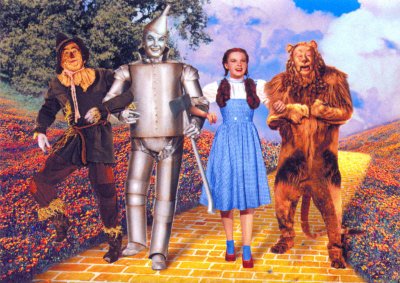
In technicolor!
Oz is perfect for the Lego game universe. Absolutely perfect. It features a diehard fanbase; a colourful, completely unique imaginative setting; a veritable grab-sack of characters; and hundreds of core and non-canonical plots.
A Lego Wizard of Oz is only plagued by one question: would it sell? It’s not easy to answer. On one hand, parents might love the Wizard of Oz as a clean alternative to toys that promote sex, drugs, or violence, and buy it in holiday droves for the younglings. Or, kids and parents alike could shun such a game as lameness in its purest form, leaving copies to gather dust tragically on shelves.
Bonus points if the soundtrack is Dark Side of the Moon.
10: Chronicles of Narnia

Yes, that’s right, I want to Lego-roll with that mincing, boy hungry paedophile Mr. Tumnus. I want to roll with him for hours: riding centaurs, combatting creepily-erotic white witches, eating tiny wedges of Turkish delight, all in Lego form. Then I want to work out my issues with an expensive counsellor.
Narnia has everything Lego games need, from a huge hardcore fan base to a whole seven books of sweet, sweet satire-ripe plots to choose from. Jokes could be plentiful, as could C.S. Lewis’ hallmark innocent, hyper-metaphorical charm. This game would be a hit in and out of youth groups worldwide.
9: Die Hard

Goddammit, yes, I want this game. Imagine a gritty, ultra-action-packed Hollywood satirisation of one of the most beloved movie series of all time. Think a Neo-Nazi Alan Rickman in Lego form, smarmy cubular scowling face and all. Or gritty cop Bruce Willis, smirking through his dotted five o’clock shadow. Now imagine those characters chasing cars, blowing up helicopters, sending Lego torsos into the engines of jet planes. Lego explosions! Who wouldn’t want to play through that?
Three movies equal one solid game.
8: Spider-Man

Batman was the most obvious comic series with which to beat ruthlessly with the unforgiving Lego makeover stick, but Spider-Man comes in a close second for its depth of characters, myriad of plots, and unattractively-religious (cultish) fanbase. Ever casually told a friend that Batman would thrash Spider-Man in a fight, only to receive a three hour point-by-point lecture - complete with prepared diagrams - on how wrong everything is that you choose to be? I give those lectures. They’ll ruin a twelve hour car trip.
Sadly, there are many reasons not to create another Spider-Man game. Sam Raimi squeezed that franchise for all the public attention it could harvest, then ceremoniously murdered it in front of millions of people. Those seeking to study the day that will forever live in infamy should look no further than 4th May 2007, the terrifying and unholy night that saw the release of Sin’s abortion, the movie-that-shall-not-be-named.
Spider-Man 3.
That film emo-jazzercise hip-thrusted a dark knife through my heart. I still have nightmares. On its anniversary, I wear black. With the ratings that film got, Hollywood knew better than to even whisper about another Spider-Man flick in closed circles until only very recently. Any chance of a Lego Spider-Man will have to wait until a new production team pulls a Lazarus, resurrecting the film franchise.
7: The Passion of the Christ

Lego Jesus building his own cross? Hi-larious.
Let's be honest, this will never, ever happen. But... Lego Bible stories from the Old Testament? That could work.
No, I‘m not looking forward to hell. Unless...
6: Dante’s Inferno, or Any Other Literary Classic

Pride, Prejudice, and Zombies, anyone?
They're not really franchises, but the idea of a true epic work of literature, like The Iliad, One Thousand and One (Arabian) Nights, or - I dunno - Beowulf being morphed into Lego would tickle the bookish nerd in me in a manner inappropriate for children. Think about it! True, tasteful adaptations (see: opposite of this) brought to life by Lego wit and adventure would be a blast. And would they be educational, making parents rush out to buy it in competitive droves? Probably not. But they would be hugely entertaining, regardless.
5: The League of Extraordinary Gentlemen

The comic, not the movie. Maybe both.
Alan Moore’s Justice League of Victorian England fits the Lego bill. Boldly solving mysteries as Dr.Jekyll/Mr. Hyde, th eInvisible Man, Dorian Gray, Captain Nemo, Martian explorer John Carter, crazed scientist Dr. Moreau, and the many other members of the League, while thwarting archvillains and saving literary kind would, in a word, be goddamned terrific.
4: Avatar: The Last Airbender

For crying out loud, M. Night Shyamalan, what in red sinful hell were you thinking? A 7% Tomatometer approval rating. Seven. Percent. As in, out of one hundred. This isn’t just bad; it’s Kazaam territory awful. The kind of movie that drives you to take a shower after seeing it, just to scrub off the terrible.
To be a product that people over the age of ten will actually want to buy, a Lego Avatar would need to separate itself by hundreds of millions of creative miles from its cinematic adaptation, modelling itself on Nickelodeon’s fantastic cult classic television series, the “inspiration for the movie,” instead. With Shyamalan’s unholy bastard child shrinking far in the rear view window, the makings of a classic Lego game could be in the works. With four types of bending, myriad other skills that could translate into various gameplay types, a gorgeous and vast world to explore, and a veritable smorgasbord of characters to choose from, this game could be excellent.
3: World War Z

Cause when there’s no more room in hell, the dead walk the earth.
Muslim is to Qur'an as Zombie Aficionado is to World War Z: An Oral History of the Zombie War by Max Brooks. A disturbing prophecy of undead doom nigh upon us, the book uses a series of fictitious interviews to let us know exactly how the shit went down when, in the near future, a zombie plague ran rampant through the living human world. One part horror, another intellectual documentary, World War Z is just dying to be tastefully translated into game form.
Here’s how I see it: hundreds of Lego zombies, lumbering limbless like C-3PO in Lego Star Wars after he takes damage, moving en masse towards your Danish-bricked hero, a player-designed character who is moving frantically from war-torn country to country in an attempt to locate a zombie-free haven to fortify with his or her family and friends. As the nations and people of the world respond to the zombie threat, so too do the globe-trotting main characters, who will do anything to secure peace from the undead hordes that chase them.
LEGO zombies equal hilarious.
2: Lord of the Rings

After years of debate and wondering, it looks like a Lego version of the epic Lord of the Rings mega-franchise is finally happening. It is a strange fate that we have suffered so much fear and doubt over so small a thing.
For obvious reasons, a Lego Lord of the Rings would sell oodles upon oodles of copies, to children and adult-nerdy-types (myself included) worldwide. The Hobbit, The Fellowship, The Two Towers, Return of the King, and possibly Silmarillion equals a mountain of gameplay potential as tall as the series itself. My guess? We’ll see a Lego Lord of the Rings pack sometime around the release of The Hobbit, when the Tolkien fan frenzy rises from hibernation. I can’t wait.
Much as LEGO Lord of the Rings would be amazing, it still doesn’t match the pure fun capacity of the franchise topping off my Lego wish list...
1: Star Trek
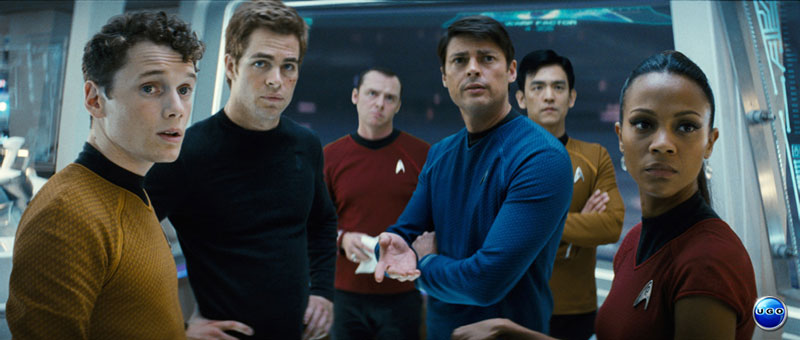
Star Trek, you’ve earned a LEGO incarnation, dammit. Let’s go over a few reasons why a LEGO Star Trek would rock:
- Five crews with stories to tell (Separated by captain... Kirk, Picard, Sisko, Janeway, Archer)
- Space battles and exploring brave new worlds on foot + a gaggle of strange technologies + hundreds of possible character species and rank types = infinite gameplay possibilities
- A massively large, dedicated fanbase waiting hungrily for a solid (or even kick-ass) Star Trek game (no dice, Star Trek Online).
- Over 700 episodes, 10 movies, and an expanded universe which only Star Wars can match to pull stories from
- Besides captains, there's a plethora of loved heroes to play as (Spock, McCoy, Uhura, Checkov, Sulu, Scotty; Riker, Worf, Data, Troi, Wesley and Beverly Crusher; Dax, Kira Nerys, O’Brien, Quark, Odo, Garak, Bashir; Chakotay, Torres, Tuvok, Kim, Paris, Neelix, Seven of Nine; T’Pol, Trip, Reed, Sato, Maywether, Flox, and others).
- An antagonist gallery filled with recognizable villains (Khan, Q, Klingons, Romulans, Nero, Borg, Lore, Cardassians, Gul Dukat, Dominion, Gorn, basically anyone to exist in a mirror universe, and lots more)
When the new, Abrams-directed Star Trek film was released, it breathed three hundred and eighty-five million box office dollars of new life into a tired franchise, and got kids excited about that corny science fiction show their dad watches after they’ve gone to bed. That set the stage: at least two sequels with the same cast are slated for release. If they’re good, this trilogy could be the next Lord of the Rings or Star Wars IV-VI. And if that happens? You can bet Star Trek marketability will boldly go where no franchise has gone before. That means Lego.
...cause the party don't start until they walk in.
* I in no way have the power to implement this sweet justice.
Labels: Columns, Greg Mengel, Lego, Lego Harry Potter: Years 1-4, State of the Union
- Greg Mengel

As a franchise, the Harry Potter brand has a long and illustrious history. J.K. Rowling’s septology of novels – following the adventures of young wizard Harry Potter as he grew up at a school for budding wizards and witches – became an unexpected success, having as much positive impact on children’s literacy rates as it did to Rowling’s bank account. Soon snapped up by Warner Brothers as a film franchise, the idea for the Harry Potter series – conceived on a train journey between Manchester and London in 1990 – has become an icon of both British literature and ‘magic’ worldwide.
However, when it comes to games, Harry Potter is somewhat of a grey area. Stacked against every developer is a key question: how does one weave the delicate tapestry of Rowling’s deep stories, about love and trust and magic and death, into an entertaining eight-hour-or-more gaming experience which will appeal to a wide demographic? This is, of course, the same problem which plagues the majority of ‘branded games’, a subset of gaming which most steer clear of. Putting across the whole of Rowling’s stories, with their complex canon and trivia, in game form is no mean feat.
That didn’t stop developers from trying. Since 2001, we’ve had better Potter games, such as the original PS1 version of Philosopher’s Stone and Prisoner of Azkaban on PlayStation 2 and Xbox; and not-so-good attempts at translating the Potter recipe into game form: the PS2 version of Goblet of Fire stands out to me as easily one of the worst of the series, alongside the spin-off game Harry Potter: Quidditch World Cup. But despite the valiant attempts of EA Games to pull off Harry Potter in a videogame setting, any Potter gaming experience I’ve been brave enough to attempt has been distinctly mediocre.
So when I heard that Traveller’s Tales were planning on taking the world of Harry Potter and transforming it into Lego form, I was adequately intrigued to see how the final product – which arrived in June in the form of Lego Harry Potter: Years 1-4 – would come together. Almost every gamer knows the Lego game concept by now, even if they feign snobbery and pretend they’ve never played one. Still, the Lego series has been highly successful, and the choice to take on Harry Potter and turn the universe of the boy wizard into pixel-modelled plastic sounded like the lifeline which Harry Potter, as a game concept, needed.
Lego Harry Potter allows gamers to play through the key moments and plot of the first four Harry Potter stories (Philosopher’s Stone, Chamber of Secrets, Prisoner of Azkaban and Goblet of Fire), but with the cutesy yet charming aesthetics of famous building toy, Lego. Of course, you play as the key characters – Harry, Ron and Hermione – for the majority of the game, but also get the opportunity to take control of other supporting characters, such as Fred and George Weasley, Remus Lupin and even the lovable giant Hagrid. Indeed, the cast in the game is strikingly large, and is faithful to both books and films, only adding to the sense of familiarity which long-term Potter fans will revel in.
It’s this familiarity which really sets up Lego Harry Potter as a must-buy for Potter fans. Hogwarts Castle, whilst not an exact clone of the castle from the movies, features many locales which will be instantly recognisable to aficionados. The majority of the Harry Potter cast make appearances, all in Lego form; whilst the player has the opportunity to learn a range of the spells from both page and screen. The game is also largely faithful to the storyline of each book: although each story has been abridged and edited down in order to fit the first four books into one game, all the key moments of the stories feature, and whilst the full depth and colour of Rowling’s novels and their canon isn’t put across, both fans and newbies to the Potter series will have at least a basic understanding of the fundamental plot of each story.
I mentioned earlier that Lego Harry Potter is charming, an adjective which I seldom get opportunity to use in a review. You find yourself playing the game and smiling; it’s child-friendly, clean, innocent fun, and beautifully implemented too. Even the older gamers amongst the Lego ranks will find Lego Harry Potter irresistible once they’ve begun on the first two or so levels. At the risk of wandering blindly into the shady underworld of New Games Journalism, wittering on about the emotional effect of games, it does make you grin like a small child as you regress and re-experience your Lego-centric youth.
However, a game is nothing without good gameplay mechanics, and Lego Harry Potter is a thought out title. Controls are intuitive and follow the basic scheme of all the Lego games’ controls. The shoulder buttons are particularly cleverly used, allowing players a quick method to switch between spells in their inventory. Furthermore, changes of controls according to the context are a big win and, whilst they’ll go largely unnoticed by most, certainly keep the game feeling smooth and polished.
The latest iteration of the Lego games franchise also utilises the excellent ‘drop-in’ co-op mode present since Lego Star Wars back in 2005. It works flawlessly: one can play through the single-player campaign alone, but a friend can join them immediately and without having to change game-mode or setup a new player profile by simply connecting a controller and pressing the ‘Start’ button. It’s a simple addition which does a huge amount to make the game more attractive to those who enjoy a laugh with friends during their gaming sessions, but the lack of an online co-op mode may have been an oversight on Traveller’s Tales’ part, and a feature which I believe would have added a huge amount more lifetime to the game.
It’s genuinely funny, too. Traveller’s Tales have interwoven some truly fantastic moments of comedy into the game, following the same utilisation of comedy which Rowling herself uses in her writing: have a quick giggle and then move swiftly on. It adds sparkle, personality and fun to the game and, considering that there is no speech during the entirety of the game, was probably the saving grace which prevented the story from becoming dull after long play sessions. Some favourite moments include the Gringotts scene, where the camera pans round to show that the goblin is not hard at work doing some number-crunching, but instead drawing a picture of a house and trees. It’s comedy gold, unexpected and laugh-out-loud.
The actions which the player undertakes are largely consistent and unvaried, however, and in a game with no script and only comedy to pull some interest back, Lego Harry Potter becomes dull during long play-sessions. In short stints, there’s no doubting the attraction and success of Lego Harry Potter, but as a game for long-term play, there’s better choices out there. Of course, for completionists and collectors, Lego Harry Potter is practically a wet dream: not only are Lego studs (the currency) readily available in bulk, but the gold and red bricks, student in peril challenges and collectible characters provide a wealth of content to unlock for those obsessed with clinching that platinum trophy. For those who aren’t largely bothered with hundred-percent-ing their games, however, Lego Harry Potter will be trying after a while.
Combat is also disappointing, though thankfully doesn’t appear often. Duels between students or opponents are slow, clunky and ultimately unrewarding, and only serve to irritate the player. Every year has its own boss character, too, and the combat doesn’t really improve here at all – every boss battle is handled in much the same way as one another, and the disappointment which these battles serves ends up making the end of each year feel a little anti-climactic.
That aside, though, Lego Harry Potter isn’t about combat, instead rewarding players for exploration and the development of their characters through that exploration. It’s where the game really comes into its own; Hogwarts is huge, sprawling and confusing, exactly as you’d imagine it would be, and all of it is spectacularly presented (graphics are high-quality and impress, and framerate is stable for the most part). There is a real magic to Lego Harry Potter as you wander round the locales and see pixies holding key objects just out of reach, or locked chests which you can’t open, or objects which just can’t be destroyed – rather than being an irritant, they give the player a sense of drive as you know that, eventually, you’ll learn the spells you need to open those chests or defeat those pixies. Whilst I’d advise against long play sessions with Lego Harry Potter, particularly if you’re playing alone, short stints combined with this motivation to learn the spells you need to complete tasks is what will keep you returning to Lego Harry Potter, even years after your first play-through.
Despite the challenge of translating Harry Potter into a game context, Traveller’s Tales have certainly done an admirable job. There are flaws, yes – it is the only game I know to give me a physical headache after more than a few hours play – but it is a game more focused at fun and enjoyment in the short-term than addictive play appeal. The parts which matter – the exploration, comedic moments, Lego aesthetics and incorporation of the Potter canon – are developed and impressive, and do well to make Lego Harry Potter a must-buy game for fans of Rowling’s creation. Admittedly, the more experienced gamers may not find any real appeal here, but the point is that this isn’t a game for the hardcore. It’s a game designed to cash in on the cutesy Lego brand, whilst providing some giggles and quick entertainment. In that, it does superbly.
8/10 [?]
Labels: Lego, Lego Harry Potter, Lego Harry Potter: Years 1-4, Linford Butler, Review, Traveller's Tales, Warner Bros.
- Linford Butler
Subscribe to our content
and never miss a single thing

 subscribe to our monthly newsletter:


Our most recent writing

Our most recent reviews
Recent comments
All comments are subject to our commenting policy
Latest videos

Subscribe on YouTube

GGTL Classics
Some of the very best articles dug out from deep in the GGTL archives, written by some of our past and present wordsmiths alike.
Your continued use of this website and/or any others owned by Gamer's Guide to Life.com represents your acceptance and indicates your full understanding of all of our legal policies and terms. Our legal policies and terms are legally binding. If you in any way disagree with or refuse to be bound by any part of said legal policies and terms, you are advised to leave this website immediately.