 Follow us on Twitter: @ggtl
 Join our friendly community!


Latest news

 3.5.12

Now here's a kid whose whole world got all twisted, leaving him stranded on a rock in the sky. He gets up. Sets off for the Bastion. Where everyone agreed to go in case of trouble.
Earlier this week, I finally finished Bastion, indie-developer Supergiant Games' much-loved action-RPG for Xbox Live Arcade and PC. Bastion's minimalistic storytelling, Diablo-style look and upgrade system, and fun, varied action mechanics made it a great hit with me, but one element of Bastion stands above the others: how alone and isolated an experience it is.
More than any game I've ever experienced, Bastion conveyed a sense of loneliness that ran through the whole mood of the game, and took an above-average, fun action-RPG game and turned it into one of my standout titles of 2011. The game uses several tricks to accomplish its bleak, deserted atmosphere, and each is worthy of consideration from other developers.
The Wild Unknown. Place can eat a man alive. Place is so raw, even the Calamity couldn't cook it. Not all of it.
Throughout Bastion, the game's protagonist, The Kid, is all alone, accompanied only by his wits and his weapons. I've experienced games that present you with a pressing sense of loneliness, having played through my fair share of Metroid games, and Bastion's sense of isolation is up there with the best of them. Its colourful art style and stylised monster designs give the game an other-worldly feel, and the atypical visuals add to the sensation that The Kid isn't in Kansas anymore.

Whilst exploring, The Kid traverses through the ruins of Caelondia and Ura, two nations that were at war before they were destroyed by a cataclysmic disaster known as The Calamity. Little titbits of Caelondian culture are scattered throughout the journey, and slowly you will discover how certain areas functioned before The Calamity struck, or learn about the various religious practices performed by the people before everyone was wiped out. The effect is similar to the opening scene in the film 28 Days Later, when the protagonist wanders through the deserted streets of London trying to figure out what happened. The details about the world you find yourself traversing, coupled with the lack of inhabitants, help drive home how alone The Kid really is.
There the kid hears something he ain't heard in a long while.
How's it go again....?
Yeah.... that's the one.
Perhaps my favourite element that Bastion uses to convey loneliness is its music. The soundtrack blends electronic and hip-hop elements with acoustic and electric guitar, with a composition that aims for an Old West, Frontier-esque feel, and leaves you with the impression that The Kid is wandering through a feral world, surviving by his own wiles, much like the classic Western heroes of old. In a way, he is.

Yet, even more than conveying an impression of the untamed West, the music hints at a sense of emptiness and an absence of hope. Many of Bastion's songs have a bluesy structure to them, or are sparse in their instrumentation, conveying a sense of sadness and emptiness, and making you, the player, feel as if you're the only one you can trust amidst the desolation.
Now the Kid sees something stranger still. His mind races. Did anybody else survive? Sure enough, he finds another. He finds me.
Nearly as enjoyable as the music is Rucks, the narrator. As The Kid slashes, shoots, and scrapes his way through the ruins of Caelondia, Rucks provides a running, second-hand commentary on the action. Rucks' sparse, fragmented speaking-pattern describes The Kid's actions at arm's length, always talking of the action in an active voice, but never becoming more involved than a basic description. Rucks talks about The Kid as though he weren't even there, turning a potential spot for camaraderie into another distancing element. Listening to Rucks calmly describe the monsters and their motivation amidst heated combat creates a chilly sense of separation.

It is this distancing element that provides the game with its most striking moment. Whilst exploring one area, around three to four hours into his journey, The Kid hears a sole acoustic guitar and a haunting, carrying voice. It's the only other voice heard in the game, and it belongs to Zia, a woman born of foreign soil whose only companion is her music. The sound of another voice, especially after so much time listening to only one person speak, is striking, and creates a near-instance feeling of kinship towards Zia, similar to how The Kid must feel to see another survivor of The Calamity.
Don't you worry, though. Once the Bastion is restored, everything'll be alright.
Bastion is one of the most remarkable games of 2011, full of unique story-telling, compelling action-RPG mechanics and a soundtrack that needs to be heard to be believed. However, my favourite - and possibly the best - aspect of the game is how isolated it made me feel, and how well it cast me as a lone adventurer. Many games have set me up me as the world's sole saviour before, but only Bastion makes me feel how 'sole' I really am.
Labels: Andrew Testerman, Bastion, Feature, Steam, Supergiant Games, Xbox 360
- Andrew Testerman
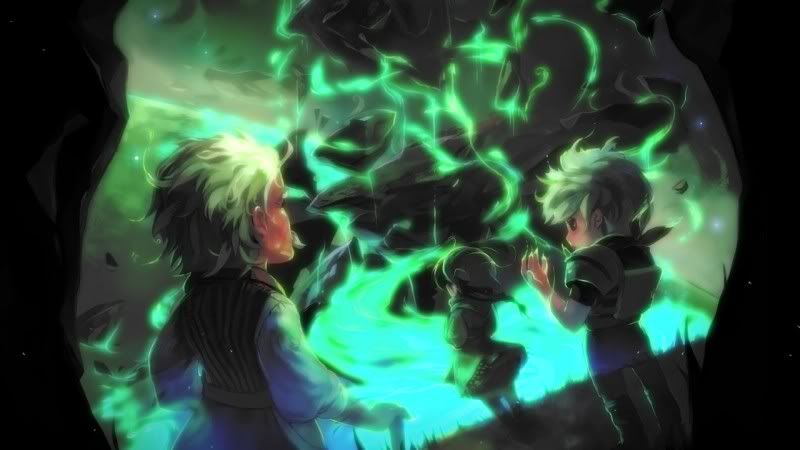
Bastion is Supergiant Games' attempt at resurrecting a forgotten medium within contemporary game design. The isometric action-RPG is a deep and twisted beast with plenty of meat to go around, but it isn't exactly the most popular format out there presently. Whilst its gameplay may contain an anachronistic feel, Bastion is the game that's ever come closest to unseating Squaresoft's vintage SNES title, The Secret of Mana, as my most favourite title in the genre. Believe me when I tell you that's quite a feat in itself.
The main story behind Bastion is one shrouded in mystery. A catastrophic event, dubbed 'the Calamity', occurred from seemingly out of nowhere, sundering the world and devastating its population. Waking up on a floating island, the Kid makes his way to the Bastion, a designated safe haven that everyone is supposed to venture to in case of disaster. But the Bastion isn't what it used to be; it's fractured and hurt by the disastrous events, rendering its protective abilities null. From here, it's up to the Kid to fix the place by finding special Cores which will restore the Bastion, and hopefully aid in finding the answers to the Calamity.
The first thing you'll notice about Bastion is the incredibly unique narration. Playing as the Kid, your actions are all taken into account and read like a book from the narrator. Rolling off a cliff, smashing an excessive amount of boxes, blocking every incoming enemy attack; everything you do is noticed and often addressed by the narrator. This seems like a recipe for disaster, as repetition quickly turns into frustration and annoyance, but it surprisingly never passes that threshold. As a matter of fact, the narrator will never - and I mean never, ever - repeat the same sentence twice. It just doesn't happen, and that's damn impressive. More importantly, though, the narrator himself acts as a device to craft and augment the game's story into something even more emotional. In a land where games copy games, where Horde mode makes it into every title and regenerating health is forcibly applied to a wide array of protagonists, this is something absolutely zero games have done before. And that's awesome.
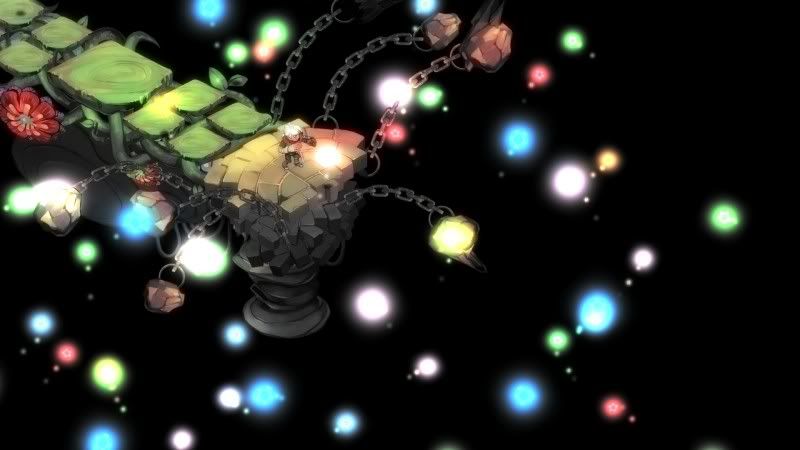
These colours? Yeah, they're the real deal.
Just around the time you start to notice the narration, you'll probably realise the creativity behind the art and level design of the game. Everything is hand-drawn, beautifully animated, and a boon for the eyes to see. Colours explode onto your screen and wrap themselves around the situation at hand, which usually helps resonate the mood of the area, be it dark and dreary or bright and happy. One of my favourite design decisions takes place as you progress through each stage; the world builds itself around you. I'm not talking about geometry just popping in and calling it a day - the sky is literally falling with pieces of the broken world, moulding itself to your surroundings so that you can progress. Without this extra effort in building each level, Bastion would lose much of its charm.
Combat is definitely a high-point, one that Supergiant Games didn't slack on in the slightest. The Kid rolls around on command, tosses his shield up the moment you press the button, and is overall lightning-quick on the response factor. Dodging foes becomes paramount to your success, as does timing your blocks to parry or counter your foes. Going berserk and mashing buttons will win you nothing, as Supergiant's system clearly rewards those who time their attacks and avoid unnecessary damage. Slugging away on enemies feels great, and utilising your abilities to the fullest makes those narrow escapes even more enthralling.
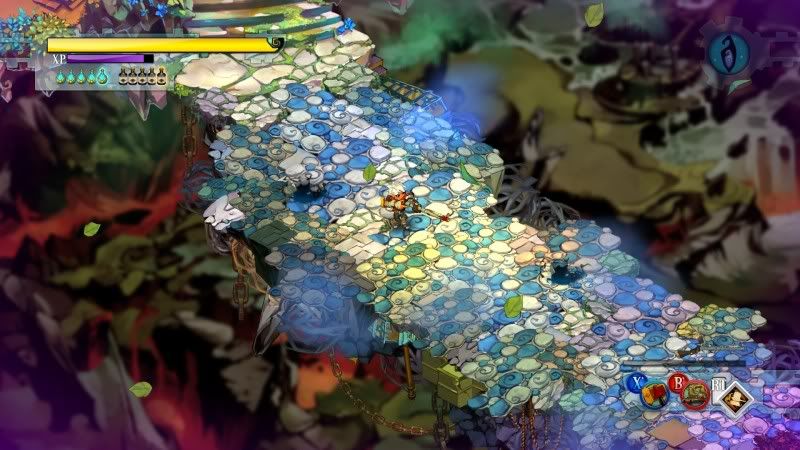
This rifle is longer than your whole body, which makes it even more awesome.
With quite a few options available, the Kid can carry two weapons and a secret attack around with him at all times. Whilst you can carry two ranged weapons or melee in both slots, I found it best to adopt the melee/ranged weapon standard (my favourite was the Brusher's Pike and Army Carbine). Every weapon has multiple upgrades, with two separate choices for every upgrade you make. The best part about this is that, if you find the upgrade you bought wasn't doing the business right, you can always flip to the other without incurring an additional cost. Besides aiding you in beating down the angries, these augmentations will actually help you pass the plethora of Proving Grounds scenarios that Supergiant has scattered about. Each weapon has one Proving Ground, which acts as a special test for the specified weapon, but it's going to take some skill and brains to garner the coveted first place position on each.
The Bastion itself is a feature that you'll constantly be coming back to. Here, you'll actually construct buildings like the Distillery, which allows you to equip a special spirit every time you level up. Each spirit bolsters your stats by granting unique passive abilities, such as providing health every time you successfully counter-attack an enemy. There's also a Memorial, which allows for in-game achievements that give you all manner of shards (the currency), and a Shrine that functions much like the skulls found in the later Halo games. Activating the idols found in the Shrine not only makes the game exponentially harder, but they also give you increased experience and shards for every monster vanquished.
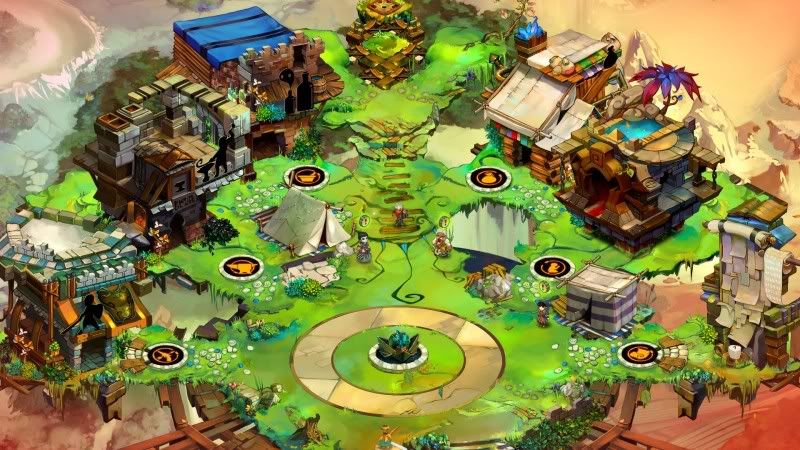
The Bastion is a floating piece of land, but it's also your hub to the rest of the world - what's left of it.
I'm a sucker for a good soundtrack, and if you are too, then you'll be pleased to know that Bastion contains an exceptional one. Much like my much-loved Secret of Mana, Bastion's sounds fit each scenario perfectly, and offers catchy beats with some very surprisingly well done vocal work in a couple of tracks. My personal favourite track is entitled Spike in a Rail - take a listen and become entranced with the unadulterated awesome of Darren Korb.
There's isn't much to dislike in Bastion, but I did run into a couple of issues which I found semi-irritating. The game has a habit of introducing you to a brand new weapon when there's no Arsenal around to switch your equipment. This becomes troublesome because the new weapon instantly replaces one of your set items and you can't switch it out until you make it back to the Bastion or happen to run into said Arsenal. Making you use two very slow ranged weapons, instead of some kind of mêlée weapon, makes those parts of the game tricky when they really shouldn't be. This isn't always a problem, of course, but it's an irritation nonetheless.
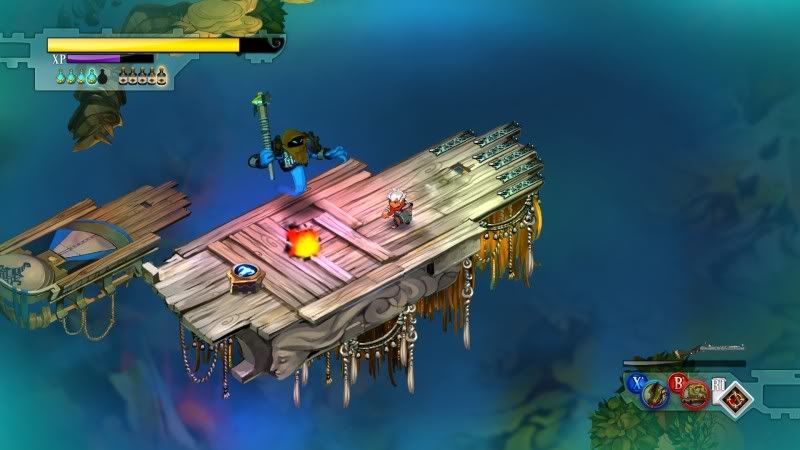
The Kid's on a boat!
It may seem funny, considering all the weapons and customisation options, but I found the game's replay factor very light. Once you finish the game, you're given a 'New Game+' mode, which allows you to start a brand new game with all of your current items and experience. The problem is that you'll absolutely blow past everything, and can finish the game in roughly an hour and a half, whereas your first runthrough will take you somewhere around six hours. Yes, there are certain challenges you can do, and you could always select all the idols in the Shrine to make the game even harder, but there's no really compelling reason to play though the game again, again, and again, except for maybe seeing the one alternate ending. Truly, this isn't a huge issue since the game isn't a full retail release, but it is something you should be made aware of.
Bastion is a compelling action-RPG with the strong aroma of a time past - a glorious time. Whilst it doesn't have the longevity that a major RPG has, the atmosphere, soundtrack and excellent gameplay more than make up for it. Saying that, now that I'm done with the game, all I want is more Bastion.
10/10 [?]
Labels: 2011, Andrew Whipple III, Bastion, PC, Review, Supergiant Games
- Andrew Whipple III

Whilst the Summer of Arcade saw the release of Bastion exclusively on the Xbox 360, no one was quite sure when the game would find its way onto the PC. Surprisingly, only a few weeks went by before Steam users could rejoice. So, if you're curious as to how the game plays on the PC, or maybe you're just looking to see how Bastion has held up, we have an extensive, narrated look within!
Labels: 2011, Andrew Whipple III, Bastion, PC, Supergiant Games, Xbox 360
- Andrew Whipple III
Subscribe to our content
and never miss a single thing

 subscribe to our monthly newsletter:
Our most recent writing

Our most recent reviews
Recent comments
All comments are subject to our commenting policy
Latest videos

Subscribe on YouTube

GGTL Classics
Some of the very best articles dug out from deep in the GGTL archives, written by some of our past and present wordsmiths alike.
Your continued use of this website and/or any others owned by Gamer's Guide to Life.com represents your acceptance and indicates your full understanding of all of our legal policies and terms. Our legal policies and terms are legally binding. If you in any way disagree with or refuse to be bound by any part of said legal policies and terms, you are advised to leave this website immediately.